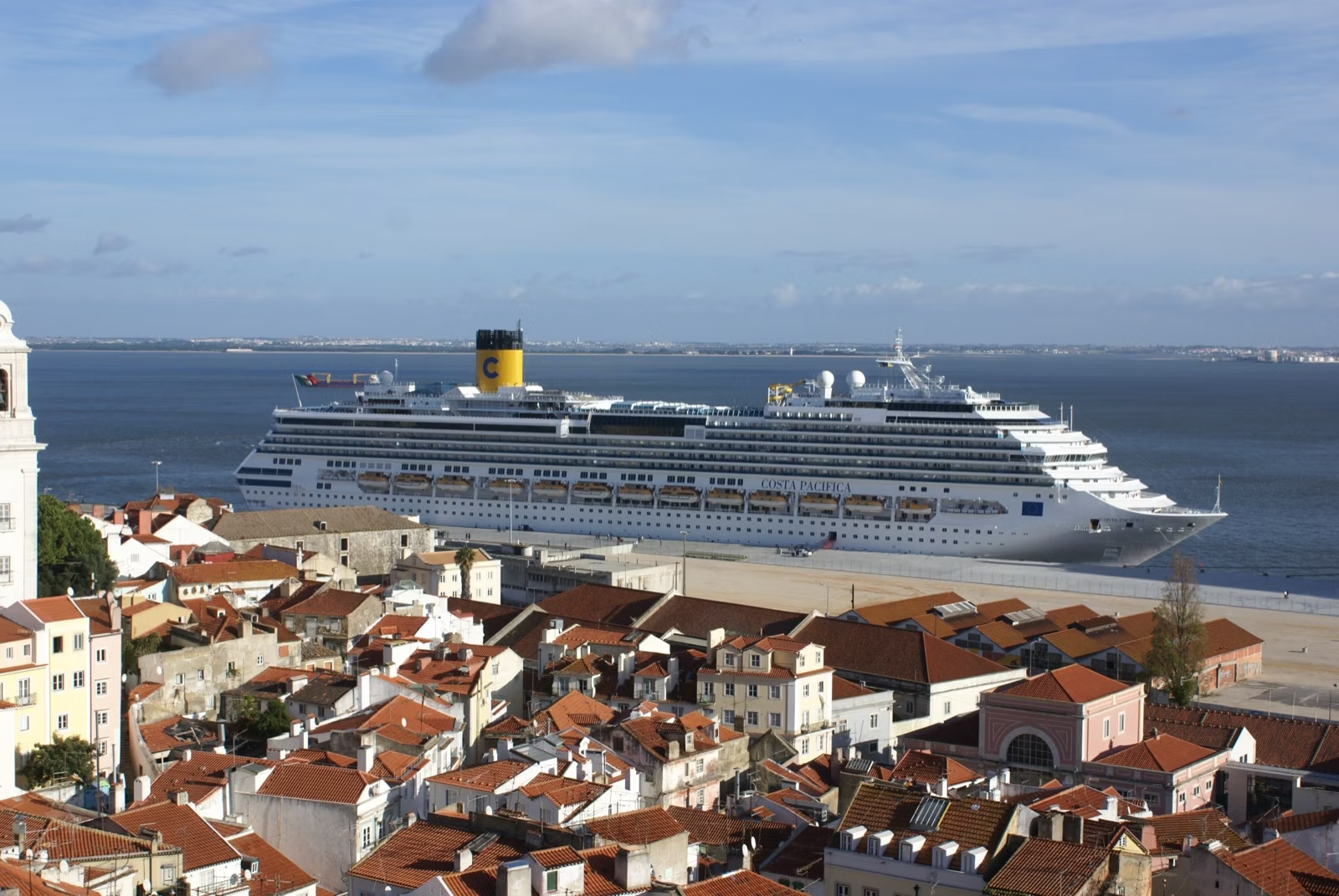
Lisboa panoramic view — Portugal

Voyspark · Destinations · Portugal

Lisboa.
The Atlantic capital where Brazil meets Europe.

Free
8 bairros21°C primaveraBacalhau em 365 receitasFado em casa vadioSete colinas + Tejo

📊 Quick comparison

ItemValue
Best seasonabril, maio, setembro, outubro
LanguagePortuguês europeu (com sotaque fechado, sílabas comidas)
CurrencyEuro (EUR, €)
Power plugTipo F · 230V · 50Hz
Emergency112 (unificado UE)
Avg cost/day (couple)€ 408 /day (couple)
Direct flightsFrom São Paulo (GRU), TAP and Latam operate daily, 9h45-10h30, €600-1,100 RT low season, €1,200-2,000 high
Vaccines / docsBrazilians enter Portugal (Schengen) visa-free for tourism up to 90 days in a 180-day period — just passport valid 6+ months past travel

Cultural Decoder

Unwritten codes of Lisboa.

What changes when you're no longer a tourist — and how to avoid an early misstep.

Greetings

  • ·Olá / Bom dia / Boa tarde — sempre cumprimente ao entrar em cafés e lojas
  • ·Dois beijos no rosto (direita primeiro) entre conhecidos, em contexto social
  • ·Aperto de mão firme em contexto formal/profissional

Tipping

Opcional, mas valorizado em serviços de qualidade

5-10% em restaurantes, arredondar em táxis e cafés

Dress code

  • ·Smart casual no centro — tênis aceito mas evite roupa de academia em jantar
  • ·Cobrir ombros em igrejas (Sé, Jerónimos)
  • ·Conforto pra ladeiras: sapato fechado com sola firme

Taboos

  • !Não chame brasileiro de portugues nem vice-versa em tom de zoeira — funciona só com intimidade
  • !Não fale alto em transporte público
  • !Não compare bacalhau brasileiro com português

Time perception

Pontualidade frouxa em contexto social (15min de tolerância). Almoço longo é cultural — não acelere. Almoço entre 13h-15h, jantar a partir das 20h.

Lisboa não é a Europa que o turista imagina. Não tem a grandeza imperial de Paris, a velocidade financeira de Londres, o caos artístico de Berlim. Tem outra coisa — uma cidade pequena para padrões europeus, construída em sete colinas inclinadas à beira do Tejo, com luz que fotógrafos chamam de luz de Lisboa porque é diferente de tudo. Janelas mais limpas, fachadas mais claras, pôr-do-sol que dura uma hora. A cidade foi terremotada em 1755, reconstruída pelo Marquês de Pombal num grid racional iluminista, mas as colinas continuaram caóticas — Alfama escapou do terremoto, e até hoje é o labirinto medieval mourisco que sobreviveu.

O brasileiro chega a Lisboa e descobre algo que nenhuma outra cidade europeia oferece: idioma. Você pede uma bica (espresso) num café qualquer da Rua Garrett e a conversa flui. Sotaque diferente, sim — o português europeu fechado, com sílabas comidas, é desafio na primeira semana. Mas você lê tudo, entende contexto, negocia preço, faz amizade. Para muitos brasileiros que viajam à Europa pela primeira vez, Lisboa é o aprendizado seguro — a Europa com manual em português. E é exatamente por isso que existem 400 mil brasileiros vivendo em Portugal em 2026: a cidade virou diáspora consciente.

A relação Brasil-Portugal em Lisboa é complexa, viva, às vezes tensa. O brasileiro chega achando que vai ser bem recebido (e geralmente é) mas descobre que existe um Portugal real com burocracia portuguesa, salário português (mediana €1.100 líquidos em 2026), aluguel inflacionado por imigração e fundos imobiliários. Reclama do português local que reclama do brasileiro. Mas no Bairro Alto às 23h, num bar de fado-vadio, brasileiro e português cantam Amália Rodrigues e Chico Buarque na mesma noite, e a língua resolve tudo. Lisboa é experimento de irmandade improvável que funciona melhor que parecia.

A cidade vive em escala humana. Em três dias você caminha o centro inteiro — Baixa pombalina, Chiado, Bairro Alto, Alfama, Mouraria, Príncipe Real, até Belém. Os bairros têm personalidade própria forte: Alfama é a Lisboa árabe-medieval com fado nos becos; Chiado é a Lisboa elegante de Pessoa e Eça; Bairro Alto é a vida noturna; Príncipe Real é o queer e o design; Mouraria é a Lisboa multicultural com bangladeshianos, chineses, africanos. Belém é a Lisboa imperial dos Descobrimentos. Você não cansa de Lisboa em duas semanas — você apenas vai conhecendo camadas mais finas.

A melhor coisa de Lisboa é o tempo que ela exige. Não há monumento que precise de 4 horas como Vaticano ou Louvre. Há esquina, miradouro, café onde você senta sem hora pra sair. Senta em Santa Catarina ao pôr-do-sol com uma imperial (cerveja chope) e o Tejo abre embaixo de você. Sobe Tram 28 sem destino e desce em Graça. Janta tasca em Alfama por €15 e ouve um senhor cantar fado sem microfone. É a Europa lenta, civilizada, barata-pra-o-padrão, e em português. Lisboa não impressiona — ela acolhe.

Voyspark editorial · updated monthly by our resident editor in Lisboa.

By the numbers.

Population

545k (cidade) / 3M (Grande Lisboa)

Time zone

WET (UTC+0, horário de verão UTC+1)

Language

Português europeu (com sotaque fechado, sílabas comidas)

Currency

Euro (EUR, €)

Plug · voltage

Tipo F · 230V · 50Hz

Emergency

112 (unificado UE)

Known for

FadoPastel de nataBacalhauSete colinasTram 28SintraDescobrimentosAzulejo

History.

From Phoenicians to the earthquake, from Brazilian gold to the Carnation Revolution: 3000 years in one capital.

Lisbon was born Phoenician. Around 1200 BCE, navigators from Lebanon founded Olissipo in the Tagus estuary, a strategic point for tin trade with British Cornwall and silver with the southern Iberian Peninsula. Greeks passed through, Carthaginians briefly dominated, and in 138 BCE Rome incorporated the region, naming it Felicitas Iulia Olisipo. They built a Roman theatre (whose ruins are now beneath the Sé cathedral), baths, forum. The city was a relatively minor Roman prefecture — Rome was in Mérida, not Olisipo.

The defining chapter starts in 711, when Berbers from North Africa cross the Strait of Gibraltar and within 8 years conquer almost the entire Iberian Peninsula. Lisbon becomes Al-Ushbuna, part of the Caliphate of Córdoba and later the Taifa Kingdom of Badajoz. For 436 years (711-1147), it was a Muslim city — with central mosque where the Sé cathedral stands today, public baths, silk markets, library, Arab physicians. Alfama (from Arabic al-hamma, "the hot springs") still preserves the labyrinthine Andalusian configuration — narrow alleys, dead-ends, houses leaning against each other, public fountains. Walking through Alfama in 2026 means walking through a medieval Arab city frozen in time.

In 1147, Dom Afonso Henriques, first king of Portugal, conquers Lisbon after a 4-month siege, with support from English, Flemish and German crusaders en route to the Holy Land. In 1255, Lisbon becomes capital of the kingdom (Coimbra was before). During the Reconquista, Moors were tolerated in their own quarter (Mouraria, where they remained until expelled in 1497) and Jews formed the Judiaria (until expulsion in 1497, with the 1506 pogrom that killed 4000 forcibly converted Jews — one of the city's worst pages).

The Golden Century begins in 1415 with the conquest of Ceuta in North Africa and continues with Prince Henry the Navigator's Sagres School. In 1488 Bartolomeu Dias rounds the Cape of Good Hope. In 1497 Vasco da Gama leaves Belém with 4 ships and reaches Calicut, opening the India route. In 1500 Pedro Álvares Cabral, on his way to the Indies, lands on the Brazilian coast. In 1543 Portuguese navigators reach Japan. In the 16th century, Lisbon becomes the world's richest city per capita — Brazilian gold, Indian spices, Angolan slaves, Mozambican ivory, Chinese silk all arriving. The Jerónimos Monastery (1502-1601) and the Belém Tower (1514-19) were built with 5% of the pepper trade tax — both UNESCO sites today.

On November 1, 1755, All Saints' Day, at 9:40am, everything changes. An estimated magnitude 8.5-9.0 earthquake hits Lisbon while most of the population is at mass. Churches collapse onto worshippers. In 6 minutes, two-thirds of the lower town collapse. A 6-meter tsunami in the Tagus follows, invading the center. Then a 5-day fire, fueled by mass candles and reserves of olive oil and wood. 30-40k dead out of 200k population. Lost artistic treasures: royal libraries, Brazilian gold still in the India House, palaces. Enlightenment Europe reacted — Voltaire wrote the Poem on the Lisbon Disaster, Kant dedicated three treatises to the quake, and modern seismology is born.

The Marquis of Pombal, minister of King José I, commands the rebuilding. Instead of restoring the medieval downtown, he designs a new rational, Enlightenment, earthquake-resistant city. He invents the "Pombaline cage" — an internal three-dimensional wooden grid that flexes with tremors without collapsing. The Pombaline Baixa (Rossio, Praça do Comércio, Rua Augusta, Rua do Ouro, Rua da Prata) is the world's first anti-seismic urban plan. Pombal also expels the Jesuits (1759), secularizes universities, modernizes bureaucracy, censors the church. But he doesn't touch Alfama, Bairro Alto and Mouraria — preserved as before. That's why 2026 Lisbon has this hybrid structure: geometric 18th-century lower town + old labyrinthine neighborhoods.

The 19th century brings pain: Napoleonic invasion (1807, royal family flees to Brazil), liberal wars 1832-34, loss of Brazil in 1822, regicide of 1908 (King Carlos I assassinated in Praça do Comércio), Republic in 1910 (one of Europe's first). The 20th century starts unstable and ends under dictatorship — António de Oliveira Salazar consolidates the Estado Novo in 1933, corporatist-authoritarian regime with PIDE (political police), censorship, and bloody colonial wars in Angola (1961-74), Mozambique (1964-74) and Guinea-Bissau (1963-74). On April 25, 1974, captains from the Armed Forces Movement overthrow the regime in an almost bloodless coup. The symbol: red carnations stuck in rifle barrels by florist Celeste Caeiro. Portugal becomes a democracy in just over a year. In 1986 joins the EEC (future EU). In 2002 adopts the euro.

2026 Lisbon lives structural contradiction. Portuguese GDP grows 2-3% per year, tourism breaks records (12 million visitors at Humberto Delgado in 2024), startups flourish (Web Summit happens in Lisbon every November with 70k people), digital nomads arrive in constant flow. But the Portuguese median wage is €1,100 net and rent in central Lisbon went from €600 (2015) to €1,400-1,800 (2026) — Airbnb and international real estate funds inflated the market, and young Portuguese are pushed to the suburbs. There are 400k Brazilians living in Portugal, plus Angolan, Ukrainian (refugees), Nepalese and Bangladeshi communities. The city is more cosmopolitan than ever, but the tension between the tourist who sees a cheap paradise and the local who sees an unaffordable city is palpable. That's the Lisbon you visit in 2026: beautiful, alive, vibrant, in open dialogue with the future, while simultaneously crossing the biggest social transformation since April 25.

Neighborhoods by personality.

Every neighborhood has its own temperature. Tell us your vibe — we'll re-rank.

01

Príncipe Real

95% match with your Slow Romantic profile

The most desired neighborhood by aware Brazilians and European digital nomads. Between Bairro Alto and Avenida da Liberdade, with Jardim do Príncipe Real (the heart), Embaixada (neo-Moorish palace turned concept store), Praça das Flores, streets with independent design shops, Ler Devagar bookshop (at LX Factory nearby), signature restaurants (Mini Bar, A Cevicheria), established queer scene. Yellow metro (Rato) or green (Avenida) close. Stay here 5-10 days and have all Lisbon on foot or 10 min by transport.

✓ Cena gastronômica autoral✓ Queer-friendly✓ Design independente✓ Central a pé⚠ Caro pra padrão Lisboa

02

Alfama

92% match with your Slow Romantic profile

The Arab-medieval neighborhood that survived the 1755 earthquake. Narrow streets on a steep hill, centenary houses glued together, laundry on windows, smell of grilled sardine, vadio fado escaping from tasca to tasca. At the top, Castelo de São Jorge (360° Tagus view). At the foot, the Sé Cathedral. Tram 28 cuts through. Stay here if you want the romantic-movie Lisbon — but know that wheelie suitcases on steps will punish you.

✓ Atmosfera medieval✓ Fado de tasca✓ Castelo no topo⚠ Subidas brutais⚠ Mala c/ rodinhas = pesadelo

03

Chiado

90% match with your Slow Romantic profile

The elegant neighborhood. Café A Brasileira where Fernando Pessoa drank his bica, Bertrand Bookshop (world's oldest continuously operating, since 1732), theatres (São Carlos, Trindade), fine shops, Rua Garrett. It's the cultural Lisbon of early-20th-century intellectuals (Pessoa, Eça, Camilo Castelo Branco). Staying here is expensive but central and elegant — Baixa-Chiado metro is the city's main hub.

✓ Central e elegante✓ Livraria mais antiga✓ Pessoa & Eça✓ Metrô principal⚠ Caro e turístico

04

Bairro Alto

87% match with your Slow Romantic profile

Nighttime neighborhood — by day it looks like decayed-charming residential, by night becomes Lisbon's biggest bar concentration. Fado-vadio houses (Tasca do Chico iconic), hip bars (Pavilhão Chinês), hipster restaurants (Páteo de São Miguel), street art. Borders Príncipe Real to the west. Staying here only recommended for late sleepers — night noise is real. Young couples, backpackers and party people love it. Families and early sleepers: skip.

✓ Vida noturna intensa✓ Fado vadio✓ Street art⚠ Barulho até 03h⚠ Não dorme em hotel barato

05

Belém

82% match with your Slow Romantic profile

Monumental Lisbon of the Discoveries. Jerónimos Monastery, Belém Tower, Discoveries Monument, MAAT (contemporary art museum in Amanda Levete's futuristic building), Belém Cultural Centre, National Coach Museum. And, of course, the original Pastéis de Belém (since 1837, 30-min queue on Saturday). 6km from center — tram 15 or Uber. Stay only if 10+ days and want quiet mornings; otherwise visit in one day.

✓ Patrimônios mundiais✓ Pastéis de Belém original✓ MAAT contemporâneo⚠ Longe do centro⚠ Sem vida noturna

06

Graça & São Vicente

80% match with your Slow Romantic profile

Above Alfama, atop São Vicente hill. Popular-residential neighborhood, incredible viewpoints (Senhora do Monte, Graça), São Vicente de Fora Church, Feira da Ladra (Tuesday and Saturday, Lisbon's biggest street market). Less touristy than Alfama, with genuine neighborhood tascas and civil prices. Staying here is the authentic Alfama alternative — same medieval charm, half the Airbnb.

✓ Miradouros incríveis✓ Feira da Ladra✓ Menos turístico✓ Tasca de bairro⚠ Subidas idem Alfama

07

Estrela & Lapa

76% match with your Slow Romantic profile

Aristocratic neighborhoods to the west. Estrela has the Estrela Basilica (monumental, dome visible from half of Lisbon) and Jardim da Estrela. Lapa is the embassy quarter, 19th-century mansions, fine restaurants. All quiet, elegant, no tourist hordes. Good for families, executives, older couples preferring residential comfort to nightlife. Trams 25 and 28 cross through.

✓ Silencioso e elegante✓ Jardim da Estrela✓ Sem turistão⚠ Sem vida noturna⚠ Comércio limitado

08

Cais do Sodré

73% match with your Slow Romantic profile

Former decayed port neighborhood that became nightlife destination in the last 10 years. Pink Street (Rua Nova do Carvalho) is literally a pink-painted street, full of bars (Pensão Amor is the icon). Time Out Market is here — gourmet food court with 32 Portuguese chefs curated by the magazine. Good for night + food — bad for staying (noise, too casual).

✓ Time Out Market✓ Pink Street✓ Vida noturna⚠ Barulhento⚠ Não autêntico

When to go.

We crossed climate, average price, crowds and your tastes. Green = good, gold = great, red = avoid.

Jan12° · $$
Fev13° · $$
Mar15° · $$
Abr18° · $$$
Mai21° · $$$
Jun24° · $$$$
Jul28° · $$$$
Ago29° · $$$$
Set26° · $$$
Out21° · $$$
Nov16° · $$
Dez12° · $$$

Voyspark AI suggests: Abril, maio, setembro e outubro são as janelas certas. Verão (jun-ago) tem 28-35°C, alta lotação turística, Sintra com filas absurdas e Airbnb subindo 40%. Inverno (dez-fev) é ameno (10-15°C) com chuva intermitente, museus vazios e fado nas casas pequenas. Hospede-se em Príncipe Real ou Alfama, não em Baixa (turística demais). Cuidado com Sintra em ponte de feriado e com filas no Pastéis de Belém ao sábado — vá às 9h30 ou após 18h.

Gastronomy.

Dishes worth the trip — no tourist traps, no gimmicks.

Bacalhau (em 365 receitas) em Lisboa

Bacalhau (em 365 receitas)

The national fish, imported salted from Norway/Iceland since the Discoveries. They say Portugal has one recipe for each day of the year — bacalhau à brás (shredded with potato sticks, egg, onion, olive), com natas (gratin), à Gomes de Sá (with boiled potato and egg), pastel de bacalhau (fried), espiritual (mousse), bolinho de bacalhau (fried with cheese). Each region has versions. In Lisbon, any decent tasca serves à brás and Gomes de Sá. Casa Aleixo (Alvalade) is the 70-year reference.

📍 Casa Aleixo (Alvalade), Laurentina (Saldanha), Solar dos Presuntos (Restauradores)💶 € 14-22

Wikimedia Commons · CC

Pastel de nata em Lisboa

Pastel de nata

National heritage. Crispy puff pastry with egg-yolk-and-sugar cream, cinnamon sugar on top. The original came from Jerónimos Monastery in the 18th century (nuns used egg whites to starch habits and had tons of yolks). The original Pastéis de Belém recipe (Antiga Confeitaria de Belém, since 1837) is still industrial secret — only 3 people in the world know it. Must be eaten hot at the Belém factory. Manteigaria (Chiado) and Aloma (Campo de Ourique) are award-winning alternatives elsewhere.

📍 Pastéis de Belém (original 1837), Manteigaria (Chiado), Aloma (Campo de Ourique)💶 € 1.40-2

Picsum Photos (fallback)

Sardinha assada em Lisboa

Sardinha assada

June food — Santo António (June 13) and Santos Populares fill the streets of Alfama, Mouraria, Graça and Bairro Alto with improvised grills, fresh sardine, basil, vinho verde, poetry-bearing basil plants. The most democratic ritual in Lisbon. Outside June, any tasca grills sardine throughout summer (May-Sept). Served over bread slice (which absorbs the oil), roasted bell pepper, pepper salad. 4-6 sardines per person = perfect dinner at €8-14.

📍 Tascas de Alfama em junho, Petisco do Bairro (Bairro Alto), Ramiro (peixe variado)💶 € 8-14

Wikimedia Commons · CC

Marisco em cervejaria em Lisboa

Marisco em cervejaria

The Portuguese cervejaria is an institution — large space, informal atmosphere, oysters, tiger shrimp, lobster, crab, percebes, clams bulhão pato. Ramiro (Av. Almirante Reis) is the world reference — Anthony Bourdain visited, the place became a tourist stop but still serves impeccable fresh seafood. Pair with Sagres or Super Bock beer, finish with prego no prato (steak in thick sandwich) as savory dessert — mandatory ritual at Ramiro.

📍 Cervejaria Ramiro (Almirante Reis), Cervejaria Trindade (Chiado), Sea Me (Chiado)💶 € 25-50

Wikimedia Commons · CC

Bifana em Lisboa

Bifana

Sandwich of pork marinated in white wine, garlic, paprika, bay leaf and pepper, fried and placed in crusty bread. Street and tasca food, simple and perfect. €2-4 at a good tasca. In Lisbon, As Bifanas do Afonso (Praça do Comércio) and Conga (Porto, original) are historic references. Order with imperial beer or bagaceira (aguardente) — classic Portuguese Sunday lunch.

📍 As Bifanas do Afonso (Comércio), Casa das Bifanas (Praça da Figueira)💶 € 2-4

Wikimedia Commons · CC

Caldo verde em Lisboa

Caldo verde

The national soup. Galician kale cut very thin, potato, chouriço sausage, olive oil. Origin in Minho province, but today served throughout the country. Absolute comfort on a cold day. At traditional Portuguese homes, opens Sunday dinner. Can be a whole meal with rye bread and cheese slice. €4-7 per bowl.

📍 Qualquer tasca tradicional, Solar dos Presuntos, Tasca da Esquina (Campo de Ourique)💶 € 4-7

Wikimedia Commons · CC

Vinho verde & vinho tinto português em Lisboa

Vinho verde & vinho tinto português

Portugal has some of the world's best wine-quality-to-price ratios. Vinho verde (from Minho, light, slightly sparkling, low alcohol, perfect in summer) costs €3-7 a bottle at market, €4-9 a glass at restaurant. Douro, Alentejo, Dão red wine — full-bodied, elegant tannins — €5-15 bottle at market, €5-12 glass at decent restaurant. Quinta do Crasto, Esporão, Mateus (iconic rosé), Casal Garcia (popular verde). For fado: heavy Alentejo red. For sardine: vinho verde.

📍 Garrafeira Nacional (Chiado), Wine With a View (terraço Sé), By the Wine (Chiado)💶 € 5-12/taça

Wikimedia Commons · CC

Polvo à lagareiro em Lisboa

Polvo à lagareiro

Octopus boiled in water, then roasted in the oven with smashed potatoes, drowned in extra-virgin olive oil and garlic. Iconic Portuguese coastal dish. In Lisbon, A Travessa (Madragoa) and Solar dos Nunes (Belém) serve anthological versions. €18-28 plate. Pairs with full-bodied Douro red.

📍 A Travessa (Madragoa), Solar dos Nunes (Belém), Petisco do Bairro (Bairro Alto)💶 € 18-28

Wikimedia Commons · CC

Bica & café português em Lisboa

Bica & café português

Bica is the Lisbon espresso — made in Italian machine with dark-roasted Portuguese-style arabica, served in small cup, costs €0.85-1.50 at any neighborhood café. Curta = normal espresso; longa = more water; meia de leite = mid-size coffee with milk; galão = large coffee with milk in tall glass. Ritual: standing at counter, throat clear, then off. Café A Brasileira (Chiado) and Confeitaria Nacional (Rossio) are historic classics.

📍 A Brasileira (Chiado, histórico), Fábrica Coffee Roasters (multi), Hello Kristof (Príncipe Real)💶 € 0.85-2

Wikimedia Commons · CC

Ginjinha em Lisboa

Ginjinha

Lisbon liqueur of ginja (sour cherry) with aguardente and sugar. Served in plastic or ceramic shot cup, with or without fruit at the bottom. €1-1.50 per shot. A Ginjinha (Rossio, corner, no other name, since 1840) is the temple — stand on the sidewalk drinking. In chocolate cup (modern version) it's €2.50. After dinner, ritual to end the night.

📍 A Ginjinha (Rossio, desde 1840), Ginjinha Sem Rival (Rossio)💶 € 1-2.50

Wikimedia Commons · CC

Petiscos & tasca portuguesa em Lisboa

Petiscos & tasca portuguesa

The Portuguese tapas. Small shared plates — moelas (gizzards), peixinhos da horta (fried green beans), pastéis de bacalhau, Serra cheese, pata negra ham, olives with piri-piri, chouriço grilled on a plate with aguardente flambé. Pairs with house wine or imperial. €4-9 per petisco. Tasca da Esquina (Campo de Ourique) and Cervejaria Trindade (Chiado) are references. Ritual: order 4-5 petiscos for two + bottle of wine = perfect dinner.

📍 Tasca da Esquina (Campo de Ourique), Páteo de São Miguel (Alfama), Cervejaria Trindade💶 € 15-25 (4-5 petiscos)

Picsum Photos (fallback)

Francesinha (do Porto, mas amada em Lisboa) em Lisboa

Francesinha (do Porto, mas amada em Lisboa)

Origin in Porto, but today served in Lisbon too. Monumental sandwich: bread with steak, ham, sausage, melted cheese on top, fried egg, drenched in spicy beer-and-tomato sauce. Nearly 1500 calories. In Lisbon, Francesinha do Cais (Cais do Sodré) and Tendinha (Saldanha) serve decent versions. But the Porto original is always better — visit Porto for the classic.

📍 Francesinha do Cais (Cais do Sodré) ou ir ao Porto💶 € 11-15

Wikimedia Commons · CC

Getting there and around.

Airport, public transport, direct flights, walkability.

Eléctrico 28 amarelo cruzando Alfama
Tram 28 — o eléctrico histórico que cruza as sete colinas. · Wikimedia Commons · CC BY-SA 4.0

From airport to center

Humberto Delgado airport (LIS) is inside the city, 7 km from center. Three options: (1) Red metro (Aeroporto → Saldanha → São Sebastião, connection to blue/yellow), 25-30 min, €1.65 (Viva Viagem card). (2) Uber/Bolt/Free Now, €12-18 to center, 15-30 min depending on traffic. (3) Official taxi (meter), €18-25 with night surcharge 10pm-6am. DO NOT use unidentified taxis or those offering fixed-rate in the hall — scam.

Public transport

Metro has 4 lines (blue, yellow, green, red), runs 6:30am-1am. Viva Viagem ticket (rechargeable green card) costs €0.50 initial card + €1.65/ride (single zone). Daily pass €6.60 (Metro + Carris buses + trams). 24h pass €10.55 (includes CP urban trains). Tram 28 (yellow historic, Martim Moniz → Estrela, through Alfama-Graça) costs €3 inside the tram, or included in Viva Viagem. Tram 15 (modern, Praça da Figueira → Belém) also €3. Carris buses cover the rest. Apps: Google Maps works perfectly; Citymapper is better for intermodal integration.

Direct flights

From São Paulo (GRU), TAP and Latam operate daily, 9h45-10h30, €600-1,100 RT low season, €1,200-2,000 high. From Rio (GIG), TAP and Azul (codeshare) daily, 9h, same fares. From Recife (REC) and Fortaleza (FOR), Azul/TAP, 7h30-8h, €500-900 (usually cheaper than southeast flights). From BH (CNF) and Brasília (BSB): connection via GRU or GIG. From Porto Alegre (POA), Latam direct some summer dates; otherwise connection.

Walkability

Central neighborhoods (Baixa, Chiado, Bairro Alto, Príncipe Real, Alfama) are fully walkable — 800m-2km between them. But seven hills means brutal climbs in Alfama, Bairro Alto, Castelo. Use historic lifts (Santa Justa €5.30, Glória €3.80, Bica €3.80) or trams 28/12/15 when hill is too much. For Belém (6km), use tram 15 (35-45 min) or Uber (€10-15). For Sintra: CP train from Rossio (40 min, €2.40), NOT car (parking impossible). Lisbon isn't for slippery shoes — Portuguese calçada (stone mosaic) slips in rain.

Safety.

88.0/10

Solo female travel

Lisbon ranks among Europe's top 5 capitals for solo female travelers. Welcoming vibe, very low aggressive catcalling, safe nightlife in Príncipe Real, Chiado, Bairro Alto and Cais do Sodré. Normal precaution with belongings on public transport and tourist streets. Walking late in Príncipe Real or Chiado is fine; in Alfama late better with company (not due to danger, but the labyrinth is easy to get lost in).

LGBTQ+

Portugal was the world's third country to allow gay marriage (June 2010, before Spain in relative comparison — Spain approved in 2005 but Portugal saw later evolution including adoption in 2016). Príncipe Real is the historic queer neighborhood — Trumps, Finalmente, Bar TR3S, Side Café. Lisbon Pride in June with 50k people. Same-sex hand-holding is totally normalized in center, Príncipe Real, Chiado, Bairro Alto. Portuguese gender identity law is among the world's most advanced (self-determination from age 16).

Don't miss.

  • Jerónimos Monastery (Belém) — UNESCO World Heritage, 16th-century Manueline Gothic built with pepper-trade gold. Vasco da Gama and Luís de Camões tombs. Entry €12 (combo with Belém Tower €18). Saturday queues, go at 9:30am or after 4pm. 2h required.
  • Belém Tower — 1519 fortress, UNESCO World Heritage. Defended Tagus entrance during the Discoveries. Tight climb (original spiral staircase), but worth the view. €8. Combine with Jerónimos same day.
  • Castelo de São Jorge — Moorish fortress atop Alfama hill, with 360° Lisbon view. Peacocks roaming, ruins, museum on Moors and Reconquista. €15. Take the Castle elevator (free, inside building on Rua dos Fanqueiros) to skip 30 min of brutal climb.
  • Original Pastéis de Belém — since 1837, at the Belém factory, with secret recipe from Jerónimos nuns. Hot pastéis from the oven every 8 min, dusted with cinnamon and powdered sugar. €1.40 each. 30-90 min queue on Saturday/Sunday lunch. Go at 9:30am or after 6pm. DO NOT compare with supermarket nata — different dimension.
  • Yellow Tram 28 — the historic tram since the 1930s crossing Estrela → Bairro Alto → Baixa → Alfama → Graça. 1h30 inside the tram full of tourists, but the hill views through windows are worth it. €3 inside. Go at 8am (no tourists) or 7pm (sunset). Watch for pickpockets — bag in front, phone tucked.
  • Sintra (mandatory day-trip) — UNESCO Heritage, Romantic Pena Palace, esoteric Quinta da Regaleira, Moorish Castle, Cabo da Roca. CP train from Rossio in 40 min, €2.40. Reserve a whole day. Travesseiro de Sintra (puff pastry) at Piriquita.
  • Authentic fado house — don't confuse tourist houses (Adega Machado, Senhor Vinho — good but stylized) with fado-vadio houses (Tasca do Chico in Bairro Alto, Mesa de Frades in Alfama, A Baiuca in Alfama). Vadio = anyone can come up and sing, local fadistas appear randomly. Reservation mandatory, €25-50 with simple dinner. Total silence during singing.
  • Miradouro de Santa Catarina at sunset — between Bairro Alto and Príncipe Real, with view of Tagus and 25 de Abril Bridge (Golden Gate's sister). Imperial beer €3, young vibe, improvised musicians. Authentic local scene, not tourist horde. Senhora do Monte (Graça) has superior view but loses on vibe.
  • Feira da Ladra (Tuesday and Saturday) — Lisbon's biggest street market, at Campo de Santa Clara (behind São Vicente de Fora, Graça). Genuine antiques (azulejo, silver, 1950s family photos), thrift, used books, vinyl. 8am-5pm. Hunt without rush.
  • Time Out Market (Cais do Sodré) — gourmet food court created by Time Out magazine in 2014, with 32 selected Portuguese chefs. Not traditional (it's modern food court) but curation is serious — Henrique Sá Pessoa, Marlene Vieira, José Avillez all have stalls. €15-25 a plate. Good for quality quick lunch when you want to try 3 things instead of a closed dinner.
  • Azulejo Museum — unique collection dedicated to Portuguese azulejo (300k pieces, 15th to 21st century) in former convent (Madre de Deus). Monumental 23-meter panel showing Lisbon before the 1755 earthquake — only visual record of the disappeared city. €8. In Marvila (outer zone), tram 794. 2h.
  • MAAT (Art, Architecture and Technology Museum) — Amanda Levete's futuristic building inaugurated 2016 on the Tagus in Belém. Walkable roof with river view. Contemporary exhibitions. Combines with adjacent former EDP-Tejo Power Station. €11.
  • Centenary historic shops — Lisbon preserves dozens of 100+ year-old businesses: Conserveira de Lisboa (1930, canned fish), Manuel Tavares (1860, wines and cheeses), Confeitaria Nacional (1829, sweets), A Vida Portuguesa (curated but with classic products), Luvaria Ulisses (1925, hand-stitched gloves on Rua do Carmo, 5m² counter). Walk Rua Garrett and Rua Augusta to discover.
  • LX Factory — former 19th-century industrial complex (textile factory) in Alcântara, reconverted into creative hub. Design shops, third-wave cafés, restaurants (Cantina LX), Ler Devagar bookshop (with flying bicycle on ceiling, photo classic), festivals. Under the 25 de Abril Bridge. Sunday morning has market. €0, free.
  • Sé Cathedral of Lisbon — 12th-century medieval cathedral built on former Moorish mosque on former Roman temple. Robust, fortified (looked like a castle). 30-min visit. €5. Combine with Castelo de São Jorge in the same Alfama walk.
  • Portuguese calçada — limestone-and-basalt mosaic pavement, geometric and figurative patterns, Lisbon symbol. Rossio Square has the iconic wave pattern (vertigo-inducing). DO NOT wear slippery shoes or stiletto heels — calçada slips in rain and breaks heels. Rubber-soled sneakers or textured-sole shoes.

Avoid.

  • Don't buy pastel de nata only at Pastéis de Belém. The original is historic and fantastic, but Manteigaria (Chiado and Time Out Market), Aloma (Campo de Ourique), Confeitaria Nacional (Rossio) and Pastelaria Versailles (Saldanha) serve equally award-winning versions without the 90-min queue. Eat several throughout the trip at different bakeries — it's part of the sport.
  • Don't confuse European Portuguese with Brazilian in the first hours. Closed accent, swallowed syllables, harder "p" and "t". "Estás bom" becomes "tás bom". "Você" rarely used — "tu" (informal) and "o senhor/a senhora" (formal) dominate. "Pequeno-almoço" is breakfast. "Comboio" is train. "Autocarro" is bus. "Casa de banho" is bathroom. "Ementa" is menu. Adapt without judging — they understand you but you have to pay attention.
  • Don't drive in central Lisbon. Calçada portuguesa breaks tires, medieval streets don't fit modern cars, parking is virtually impossible in Bairro Alto/Alfama/Chiado/Príncipe Real. Use metro + tram + Uber. If going beyond Lisbon (Sintra, Cascais, Alentejo, Algarve, Porto), then renting makes sense — but use local company to avoid traps (Guerin is reliable, avoid Goldcar/Centauro).
  • Don't tip 18-20% like in the US. In Portugal, tipping is rounding up or leaving 5-10% at a quality dinner restaurant. At a lunch tasca, leaving the bill's change is enough. At a bica café, 10-50 cents. Excessive tipping draws attention and marks an uninformed American tourist. Cubierto (cover charge for bread, butter, olives) is NOT tip — it's a fixed €1.50-3 per-person fee, refusable (decline starter petiscos if you don't want to pay).
  • Don't compare Portugal with Brazil in the first conversation. Brazilians often arrive in Lisbon with a "discovering motherland" mindset and that annoys locals. Portuguese aren't "more polite", Brazilians aren't "happier" — they're different cultures on equal footing. Don't say "in Brazil it's better" or "in Brazil it's worse" — gets old in either direction. Ask, observe, learn. By day 3 you'll have absorbed vocabulary and rhythm.
  • Don't buy cashew nuts standing on the street. Informal sellers in tourist zones (Rossio, Comércio) charge €8-12 for a cup worth €2-3 — always weigh less than they look. Buy at neighborhood grocery: €8-15 per 100g of decent cashews. Same rule for "artisanal nuts" and "homemade peanut butter" on Rua Augusta — tourist trap.
  • Don't go to Sintra on weekend, August or long holiday. 90-min queues at Pena, 60-min at Quinta da Regaleira, parking sold out, Rossio-Sintra train standing-room only. Go on a weekday in October/May, arrive 9am, book tickets online in advance (parquesdesintra.pt). Plan a full day — you want Pena + Regaleira + Mouros + Cabo da Roca, it's a lot.
  • Don't trust car GPS in Alfama or Bairro Alto. It sends you down streets where not even a motorcycle fits, or wrong-way on pedestrian streets. Walk or use Uber/Bolt (drivers know).
  • Don't accept "friends" approaching at Rossio or Praça do Comércio offering "hashish, coke, weed". Almost always fake (tea, oregano) and tiring insistence. "Não, obrigado", keep walking without engaging. Works 95% of cases.
  • Don't assume everything accepts card. Lisbon has good card coverage but small neighborhood tasca, historic café, Feira da Ladra and street ginjinha still work cash-only. Keep €50-100 in small bills (€5, €10, €20) in your wallet. Multibanco ATM (blue, on every corner) works with Brazilian card, usually €3-5 fee per withdrawal.

Day trips.

To stretch the trip beyond the city — in 1 to 3 hours you're in a different world.

Palácio Nacional da Pena, Sintra — romantismo do século XIX

Sintra

40 min de comboio (CP, de Rossio)

UNESCO World Heritage. Pena National Palace (1840s, colorful Romanticism on top of mountain, icon), Quinta da Regaleira (initiation gardens, spiral Initiation Well), Moorish Castle (Arab ruins), Sintra National Palace (medieval), Cabo da Roca (continental Europe's westernmost point, 18 km from Sintra). Travesseiro de Sintra (puff pastry sweet) is mandatory. Go on weekday, arrive 9am, avoid August (2h+ queues).

💶 € 5 comboio RT · entradas € 16-22 cada · day-tour € 60-90

Praia do Guincho, Cascais — vento atlântico e ondas

Cascais & Estoril

35-40 min de comboio (CP, de Cais do Sodré)

Seaside town 30 km west, former Portuguese aristocratic refuge. Charming historic center, urban beaches (Praia da Rainha, Conceição), seaside walk with Belle Époque mansions, Boca do Inferno (dramatic rock formation), Casino Estoril (Europe's largest, James Bond inspired "Casino Royale"). Combines perfectly with Sintra in a full-day triangle (Sintra morning, Cabo da Roca afternoon, Cascais sunset).

💶 € 4.60 comboio RT · refeição € 18-30

Évora & Alentejo em Lisboa

Évora & Alentejo

1h30 de ônibus Rede Expressos

Capital of Alentejo. UNESCO World Heritage, with Roman Temple of Diana (1st century, still standing), medieval Cathedral, Bones Chapel (shocking and theological — walls made of 5000 monks' bones), Água de Prata aqueduct. Alentejo is the Portuguese plain of full-bodied red wine and dark bread. Combine with winery visit (Herdade do Esporão, Quinta do Mouro) on the same day. Day trip possible but overnight rewards.

💶 € 25-35 ônibus RT · vinícola € 20-40

Óbidos em Lisboa

Óbidos

1h20 de ônibus

Medieval walled village 80 km north. Castle (now a Portuguese pousada), walls you can walk around the whole village (35 min), Santa Maria Church, bookshops inside deactivated churches (Livraria de Santiago is a reference). Óbidos ginjinha served in chocolate cup is tradition. In July, Chocolate Festival; in December, Christmas Village. Perfect 1-day trip.

💶 € 12-18 ônibus RT · refeição € 15-25

Setúbal & Tróia em Lisboa

Setúbal & Tróia

45 min de comboio Fertagus + ferry

Port city 50 km south, with Arrábida Natural Park (mountain falling into the sea, one of Portugal's most beautiful landscapes), Castle of São Filipe, Portinho da Arrábida beaches. Cross the Sado estuary by ferry to Tróia — 24-km virgin sandy peninsula with feet-in-the-sand restaurants. Setúbal's choco frito (fried cuttlefish) is the specialty. Combine with dolphin watching (boat trip €35).

💶 € 8-12 transporte RT · ferry € 5 · refeição € 18-28

Porto em Lisboa

Porto

2h45 de comboio Alfa Pendular

Portugal's second city, on the Douro 313 km north. UNESCO World Heritage in historic center (Ribeira). Port wine (Vila Nova de Gaia cellars), Lello Bookshop (inspired Hogwarts), Clérigos Tower, Dom Luís I Bridge (Eiffel), francesinha (original sandwich). 1-day trip possible but short — 1-2 night overnight rewards greatly. Combines with Douro Valley (wineries).

💶 € 60-90 comboio RT · pernoite € 80-160

Fátima em Lisboa

Fátima

1h30 de ônibus

Portugal's largest Catholic pilgrimage center, 130 km north. The 1917 Marian apparitions (three shepherd children, "miracle of the sun") transformed the village into a global religious destination — 6-8 million pilgrims/year. Monumental sanctuary: Basilica of Our Lady of the Rosary (1928), Basilica of the Holy Trinity (2007, capacity 9,000), Chapel of Apparitions, Calçada dos Joelhos (Path of the Knees). For those interested in Portuguese popular faith, deeper than it seems.

💶 € 18-25 ônibus RT · entrada grátis

Visual gallery of Lisboa.

Curated images from Wikimedia Commons — click to enlarge.

Real cost.

Three profiles. Daily items and averages verified in 2026.

Budget

€60/day — hostel dorm bed €18-28, daily lunch at neighborhood tasca €9-12, shared petiscos dinner €12-16, metro day pass €6.60, coffee with pastry €2.50, museum €5-10.

Mid-range

€130/day — 3-4* boutique hotel Príncipe Real/Chiado €90-160 or Airbnb studio €80-120, à la carte lunch €14-22, decent restaurant dinner €28-45 with glass of wine, Uber €8-12, museum €10-18.

Luxury

€350/day — 5* hotel (Four Seasons Ritz, Bairro Alto Hotel, Memmo Alfama) €380-700, Belcanto/Alma dinner €180-320, free Uber €25, private Sintra day-tour €200, private Douro wine experience €250.

Avg flight

BR € 600-1.100 · UK £80-200 (low-cost) · ES € 60-180 · DE € 100-280 · NY US$700-1.300 · JP ¥150k-260k

Mid hotel

€ 100-180/noite (4* boutique Príncipe Real/Chiado)

Coffee

€ 0.85-1.50 bica + € 1.40 pastel de nata

Mid dinner

€ 25-40/pessoa (tasca decente com vinho)

Metro day

€ 6.60 — Viva Viagem passe diário

Documents.

What you need to enter and stay legally.

Visa

Brazilians enter Portugal (Schengen) visa-free for tourism up to 90 days in a 180-day period — just passport valid 6+ months past travel. ETIAS (European electronic authorization) starts May 2026 — small €7 fee, online, valid 3 years. Over 90 days needs national visa (D7 rentier, D2 entrepreneur, D8 digital nomad — all popular among Brazilians). For residency visa or Portuguese nationality by descent: consulate in SP, RJ, Recife, BH or Brasília.

Travel insurance

Travel insurance mandatory by Schengen requirement for foreigners — minimum coverage €30,000 (including health, repatriation, lost luggage). Portugal has free public health even for tourist emergencies, but private clinic consultation is €70-150, hospitalization €1,500-8,000. Recommended €50,000+. IATI, World Nomads, Mondial Assistance, Allianz Seguros. Average cost €2-4/day.

Proof of funds

May be required at entry: return or onward ticket, accommodation proof (reservation), financial means proof (€40-75/day or international card with limit, varies by officer). Schengen insurance with min €30k coverage required in theory but inconsistent enforcement — bring printout.

Ready to make it happen?

Complete curated plan based on your Taste Genome. Every item links to the official partner to book — no markup, best available price.

Estimated total

€ 2.040

7 nights · 2 people

Build full trip →

Voo GRU ⇄ LIS

9h45 direto · TAP/Latam

€ 780

Boutique Príncipe Real

5 noites · 4*

€ 850

Jantar Belcanto (2 estrelas)

José Avillez · Chiado

€ 240

Fado vadio em casa autêntica

Tasca do Chico · Alfama

€ 35

Day-trip Sintra completo

Pena + Quinta + Cabo da Roca

€ 75

Seguro Schengen 30 dias

IATI · cobertura €100k

€ 60

Community

Ask the locals

Ask real questions to travelers and locals about Lisboa.

Reads before you go.

All stories →

Go deeper.

Voyspark Journal articles to dive in.

Frequently asked questions.

What people ask before booking the flight.

Do Brazilians need a visa for Lisbon?+

NO for tourism. Brazilians enter Portugal (Schengen) visa-free up to 90 days in 180 — just passport valid 6+ months past travel. ETIAS (European online authorization) starts May 2026, €7 fee, valid 3 years — check official travel-europe.europa.eu before boarding. Over 90 days needs national visa (D7 rentier €820/month income, D2 entrepreneur, D8 digital nomad €3,480/month). For Portuguese nationality by descent: must have Portuguese grandparents or great-grandparents + consular registration.

When's the best time for Lisbon?+

April, May, September and October are perfect windows — 18-26°C, full terraces, viewpoints without excessive crowds, Sintra without queues. June has Santo António (June 13) with grilled sardine in streets — romantic chaos. July and August hit 28-35°C with Lisbon packed by international tourism, Airbnb 40% more expensive. November rains but is still pleasant; empty museums. Winter (Dec-Feb) is mild (10-15°C) with intermittent rain — good for museums, fado, and sleep, but 5:30pm sunset depresses.

Where to stay in Lisbon?+

Príncipe Real is first choice — central, queer-friendly, design, good food, welcoming vibe. Alfama if you want medieval charm (but know that wheelie suitcases on stairs will punish you). Chiado is elegant and central but expensive. Bairro Alto only for late sleepers (real night noise). Graça is the authentic Alfama alternative — same vibe, half the price. Belém only if 10+ days and want quiet mornings. AVOID Baixa (too touristy, no soul), Cais do Sodré (noisy), Intendente/Anjos at night (transitional), and anything outside central Greater Lisbon.

Worth a Sintra or Cascais day trip?+

Sintra: YES, mandatory if visiting 4+ days. World heritage, romantic film landscapes, Pena Palace atop mountain. Go weekday, arrive 9am, book online. Combine with Cabo da Roca (continental Europe's westernmost point) in afternoon. Cascais: YES if visiting 5+ days, especially May-September for beach. Charming seaside town, historic casino (inspired James Bond). Combines perfectly with Sintra in a full-day triangle: Sintra morning, Cabo da Roca noon, Cascais sunset.

Is Lisbon safe?+

Yes, one of Europe's safest capitals. Violent crime against tourists is rare. Real risks: pickpockets on tram 28 and metro in tourist zones, fake-drug sellers at Rossio (insistent but non-violent), light distraction scams at Cais do Sodré. Safe stay neighborhoods: Príncipe Real, Chiado, Alfama, Graça, Estrela, Lapa, Belém, Avenida. Avoid Casal Ventoso, Chelas, industrial Marvila outskirts. Late-night walks in Príncipe Real, Chiado, Bairro Alto are fine. Lisbon ranks among Europe's top 5 capitals for solo female travelers.

How much does Lisbon cost in 2026?+

2026 Lisbon is no longer 2015's cheap Europe. 2026 averages: bica + pastel de nata €2.50, daily lunch at tasca €9-14, bacalhau à brás €14-22, decent restaurant dinner €28-45 with wine glass, 4* boutique hotel €140-280/night high season, Airbnb Príncipe Real studio €80-140/night, tram 28 €3, Uber center-Belém €8-12. Budget €60-80/day (hostel + tasca + transport). Comfort €130-180/day. Luxury €350+/day. Half of Paris. 20-30% less than Madrid. A third of NY. Double São Paulo for equivalent standard.

How many days for Lisbon?+

Minimum: 4 days (Baixa + Chiado + Alfama + Belém + Sintra). Ideal: 6-7 days (add Bairro Alto + Príncipe Real nightlife + Cascais + viewpoints + 1 quiet neighborhood day). Comfortable: 10-14 days with Porto + Douro or Algarve extension. More than 14 only if using as base to explore all Portugal (Évora, Alentejo, Setúbal, Aveiro, Coimbra). Lisbon doesn't tire in 2 weeks — you just discover finer layers.

How to find authentic (non-touristy) fado?+

Distinction: tourist fado houses (Adega Machado, Senhor Vinho, Café Luso) serve expensive dinner with choreographed show — good but stylized, €70-120 with meal. Fado-vadio = small houses where anyone comes up and sings, local fadistas appear randomly: Tasca do Chico (Bairro Alto, packed, pure vadio, €25-35 with plate), Mesa de Frades (Alfama, old chapel covered in azulejo, €40-60), A Baiuca (Alfama, tiny, intense, €35-50), Páteo de Alfama (more touristy but decent). Reservation mandatory. TOTAL silence during singing — applause only at the end.

Is Lisbon good for families with kids?+

Excellent. Lisbon is walkable (but with hills — bring robust stroller), restaurants accept kids well, parks (Jardim da Estrela, Parque Eduardo VII, Jardim do Príncipe Real) are clean and safe. Lisbon Oceanarium at Parque das Nações is among world's best (€19 adult). Knowledge Pavilion next door. Vasco da Gama Aquarium, Zoo, KidZania, Pavilhão Atlântico. For kids under 5, Alfama is challenging (stairs); Príncipe Real and Belém are friendlier. Sintra from age 4. Dinner time earlier than Spain (7-8pm normal for families).

Lisbon vs Porto — which to choose?+

If 4-5 days: Lisbon. Bigger, more varied, with Sintra and Cascais nearby. If 7-10 days: Lisbon 5 days + Porto 2-3 days is the classic combo (Alfa Pendular train in 2h45). Porto is smaller, more intimate, on the Douro, with port wine, UNESCO Ribeira, original francesinha — different vibe, more "introvert sister" to cosmopolitan Lisbon. If visiting Portugal once, do both — you don't decide between, you complement.

Is it true there are many Brazilians in Lisbon?+

Yes — 400k Brazilians living in Portugal in 2026, the country's largest foreign community. In central Lisbon you hear Brazilian Portuguese in bakeries, restaurants, shops. Brazilian bakeries (Pão de Açúcar is Portuguese chain but Brazilian restaurants like Brasil Brasileiro and Tropical are popular). Brazilian crowd at Príncipe Real coworking, colleges, hospitals. Brazilians feel at home in many ways — but real Portugal has Portuguese bureaucracy, Portuguese wages, and real tensions between Brazilian and Portuguese communities (generally OK, but exist). Visit with open mind.

Vegetarian options in Lisbon?+

Yes, scene grew enormously. 100% vegetarian/vegan restaurants: Ao 26 Vegan Food Project (Chiado, award-winning), Jardim das Cerejas (Príncipe Real, casual), Vegana Burgers (multiple), Boa Bao (Time Out and Chiado, vegan-friendly), Tibetanos (Príncipe Real, historic vegetarian). At traditional Portuguese homes: caldo verde without chouriço (ask), tomato açorda, Serra cheese with bread, sautéed spinach, vegan pataniscas (ask — made with vegetable), grilled veggies. Watch out: many dishes hide chouriço/ham for flavor — always ask.

Does English work in Lisbon?+

Works well at hotels, tourist restaurants, museums, airport, young people in Príncipe Real/Chiado. At neighborhood tasca, historic café, older taxi driver or peripheral local trade, English is limited. But the Brazilian advantage is HUGE — language solves everything. For English speakers, Spanish works in 70% of cases (Portuguese understands Spanish better than reverse). Learn "bom dia", "boa tarde", "obrigado/obrigada", "por favor", "com licença", "quanto custa?" — opens doors and earns smiles.

How to get to Sintra from Lisbon?+

CP train (Sintra line) from Rossio direct, 40 min, €2.40 one-way (€4.80 RT). From Cais do Sodré (Cascais line) also exists but further — use Rossio. In Sintra, from station you walk to historic center in 5 min or take bus 434 going up to Pena/Mouros (€7.60 RT, hop-on-hop-off). For Cabo da Roca, bus 1253 (45 min) or taxi/Uber (€20 one-way). For Cascais, bus 417 (35 min) or train going back through Lisbon first.
Sources and external references.

Minha viagem
Voyspark AI