Buenos Aires panoramic view — Argentina

Voyspark · Destinations · Argentina

Buenos Aires.
The capital that dances in three beats — tango, asado, melancholy.

Free
7 bairros25°C outonoParrilla porteñaTango em milonga autênticaDólar blue context

📊 Quick comparison

ItemValue
Best seasonmarço, abril, maio, setembro, outubro, novembro
LanguageEspanhol rioplatense (vos, sotaque italianizado)
CurrencyPeso argentino (ARS) — preços em USD primary
Power plugTipo I + C · 220V · 50Hz
Emergency911 (unificado) · 107 ambulância · 100 bombeiros
Avg cost/day (couple)US$ 278 /day (couple)
Direct flightsFrom São Paulo (GRU), Latam, Aerolíneas, Gol, Azul daily throughout the day, 2h45, fares US$ 350-700 RT (Sky and Flybondi low-cost when flying, US$ 230-400)
Vaccines / docsArgentina is visa-free for Brazilians, Americans, British, Europeans (Schengen), Japanese, Canadians, Australians, Mexicans, Chileans — total 60+ countries

Cultural Decoder

Unwritten codes of Buenos Aires.

What changes when you're no longer a tourist — and how to avoid an early misstep.

Greetings

  • ·Beijo único na bochecha (direita) — entre todos, inclusive homens, no contexto social
  • ·Aperto de mão no negócio. Use "che" como conector ("che, todo bien?")
  • ·"Boludo" é gíria carinhosa entre amigos — não imite com estrangeiro até intimar

Tipping

10% restaurantes é norma, em dinheiro (cash). Não vai pro cartão

Restaurante: 10%. Taxi: arredonde. Barbeiro/cabelo: 10%. Hotel: 100-200 pesos por mala

Dress code

  • ·Casual chique — porteños se vestem bem mesmo no dia
  • ·Igreja: ombros cobertos. Recoleta é mais formal que Palermo
  • ·Tango milonga: smart casual, sapato fechado (saltos masculinos OK)

Taboos

  • !Não chame de "espanhol" o castellano daqui — sotaque é orgulho
  • !Não compare com Brasil sem cuidado — futebol é guerra fria diária
  • !Não recuse mate quando oferecido — circula em roda, beba até "absorver o som"
  • !Não pague em dólar sem negociar — taxa azul existe paralela à oficial

Time perception

Almoço 13h-15h, jantar 21h-23h30, milonga começa 23h e vai até 4h. Inflação significa preço de hoje difere do de ontem — confirme sempre.

Buenos Aires não é uma cidade latino-americana qualquer. Os portenhos te dirão, em algum momento, com graça e ironia, que ela é "Paris da América do Sul". Não acredite literalmente — mas não despreze também. Tem boulevares largos como os de Haussmann, prédios Beaux-Arts de virada de século, cafés com mesa de mármore que servem o mesmo cortado desde 1858, um cemitério que é mais museu de arte que necrópole. Mas tem também conventillos italianos, milongas onde tango ainda se dança sério (não pra turista), parrilla que vira ritual, e uma melancolia urbana que não é europeia — é Borges, é Cortázar, é tristeza alegre que só Buenos Aires sabe fabricar.

A cidade vive em outro fuso emocional. O argentino fala como quem canta — vos, sotaque italiano-castelhano, palavras alongadas. Janta às 22h, às 23h, às 00h. Encontra amigo numa quarta às 02h pra "tomar algo" como se fosse meio-dia. Reclama do governo com a mesma intensidade dos times. Acredita em psicanálise — Buenos Aires tem a maior densidade de psicanalistas per capita do mundo. Lê — livrarias estão em cada esquina e são noturnas, sociais, abertas até tarde.

Buenos Aires não é cidade de check-list de monumentos. É cidade de bairro (barrio). Cada barrio é praticamente uma cidade — Palermo Soho não tem nada a ver com San Telmo, que não tem nada a ver com Recoleta, que não tem nada a ver com La Boca. Você não "vê Buenos Aires" em três dias. Você mora em San Telmo numa semana e San Telmo entra no seu corpo. Depois cruza pra Palermo Soho e descobre uma Buenos Aires de skate, mate, livrarias indie. Depois Recoleta e descobre a Buenos Aires aristocrática que ainda sobrevive.

A economia argentina é o personagem extra de qualquer viagem aqui. Dólar oficial, dólar blue, dólar MEP, dólar tarjeta — o turista entra num jogo de câmbio que define quanto a viagem custa de fato. Vamos ser honestos sem promover ilegalidade: existem cambistas informais ("cuevas") em qualquer rua do microcentro, e quase todo turista que volta de Buenos Aires troca pelo menos parte do dinheiro fora do banco. Não é certificação editorial — é constatação de campo. Mais à frente explicamos como funciona, sem romantizar e sem julgar.

A melhor coisa de Buenos Aires não cabe num souvenir. É a cena de você sentado numa parrilla qualquer de Almagro às 23h30, tirando bife de chorizo do fogo a lenha, malbec mendoza num copo grosso, um casal portenho ao lado discutindo política com paixão genuína, um cachorro dormindo embaixo da mesa de outro grupo, alguém entrando com bandoneon e tocando duas peças sem pedir permissão. Buenos Aires acontece — não se visita.

Voyspark editorial · updated monthly by our resident editor in Buenos Aires.

By the numbers.

Population

3M (cidade) / 15M (Gran Buenos Aires)

Time zone

ART (UTC-3, sem horário de verão)

Language

Espanhol rioplatense (vos, sotaque italianizado)

Currency

Peso argentino (ARS) — preços em USD primary

Plug · voltage

Tipo I + C · 220V · 50Hz

Emergency

911 (unificado) · 107 ambulância · 100 bombeiros

Known for

TangoParrilla porteñaRecoleta CemeteryBorges & CortázarBoca Juniors / River PlateMalbec mendozaDulce de leche

History.

From Pedro de Mendoza to the 2001 crisis: Buenos Aires was born, died and reborn five times.

Buenos Aires history begins in 1536, when Spanish navigator Pedro de Mendoza founded Puerto Nuestra Señora Santa María del Buen Ayre on the western bank of the Río de la Plata. The first founding was catastrophe: hunger, disease, attacks by Querandí peoples, and in 1541 survivors abandoned everything and went upriver toward Asunción. For 39 years, the place was empty ruin. Buenos Aires was born dead in its first attempt — something that would repeat symbolically several times across centuries.

In 1580, Juan de Garay refounded the city — this time with strategic positioning (Plata estuary control), traditional Spanish gridded urban plan, and negotiated relations with local indigenous peoples. Buenos Aires remained peripheral colonial for two centuries — produced leather, jerky, tallow, but Spain banned direct trade with Europe, forcing the Lima-Panama route. Smuggling flourished, and porteños developed early a culture of dodging the official rule — heritage echoing in contemporary Argentine economy.

In 1776, Bourbon Spain created the Viceroyalty of the Río de la Plata, with Buenos Aires as capital — covering Argentina, Uruguay, Paraguay, parts of Bolivia. The city exploded: from 24k people in 1770 to 50k in 1810. Legalized trade, emerging Criollo bourgeoisie, intellectuals secretly reading Rousseau and Voltaire. In 1806 and 1807, Buenos Aires resisted two British invasions without Spanish help — discovered it could defend itself. The road to independence was open.

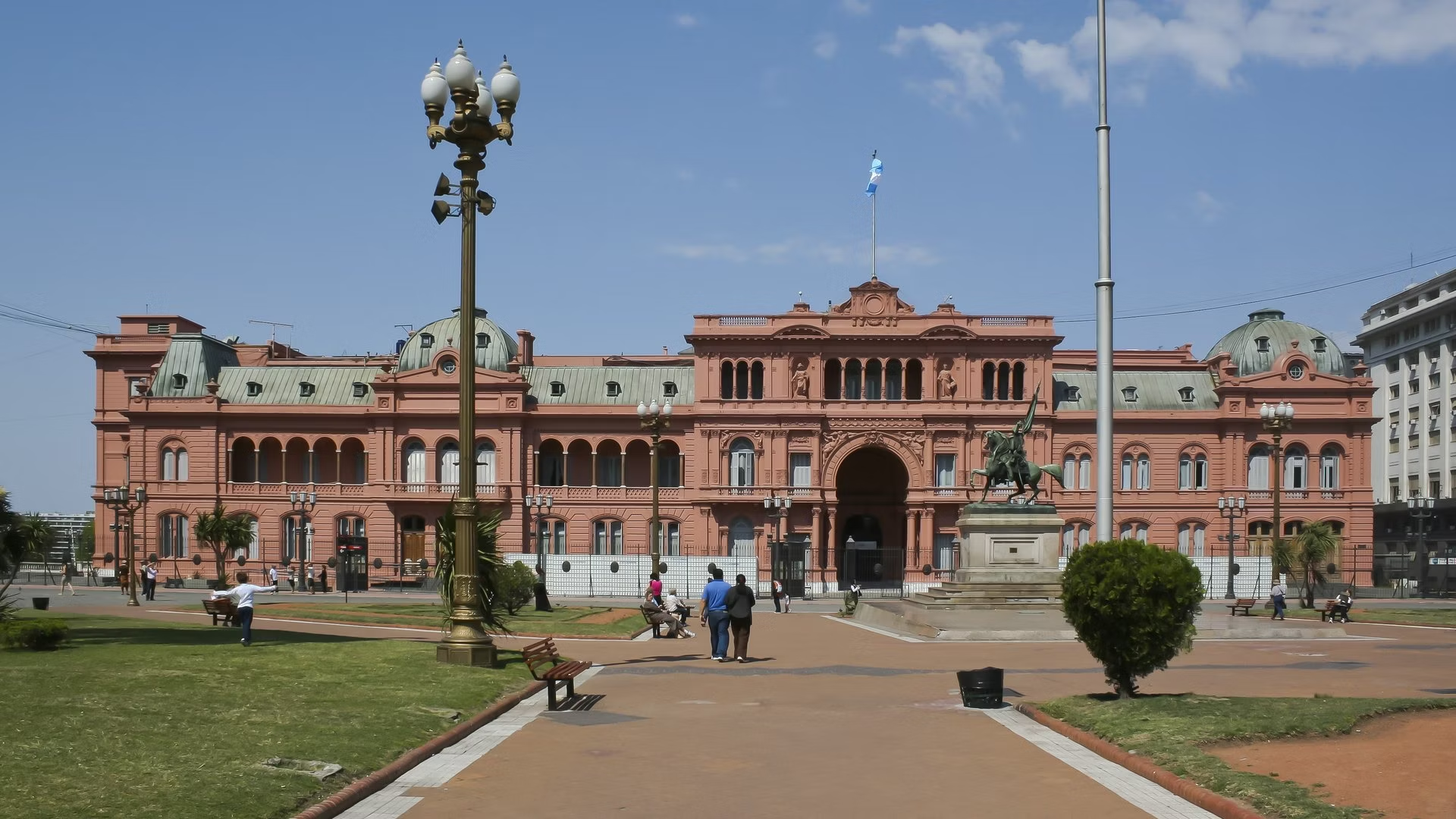
Casa Rosada na Plaza de Mayo — sede do governo argentino
Casa Rosada na Plaza de Mayo — sede do governo argentino. · Wikimedia Commons · CC BY-SA 3.0

The May Revolution (May 25, 1810) began in Buenos Aires and triggered the independence process of the United Provinces of the Río de la Plata, formalized on July 9, 1816 in Tucumán. The 19th century was turbulent: civil wars between unitarios (porteño centralists) and federales (interior), Juan Manuel de Rosas dictatorship (1829-52), Paraguayan War (1864-70, traumatic), Buenos Aires federalization in 1880. It was in this late century that the city gained its current form — Generation of '80, liberal-positivist ruling class, built Teatro Colón (1908), Casa Rosada (1873), Avenida de Mayo (1894), inspired by Haussmann.

Between 1870 and 1930, about 6 million immigrants arrived — Italians (52%), Spaniards (25%), French, Germans, Jews from Poland and Russia, Syrians, Lebanese. Buenos Aires became the most populous Southern Hemisphere city in the 1910s. It was the tango era — genre born in port brothels, among sailors and immigrants, that rose socially after Paris success (1913) and became national identity via Carlos Gardel (1890-1935). Argentina became one of the world's ten richest per-capita economies in 1914 — future seemed infinite. Borges was born in 1899; Cortázar in 1914; both grew up in this prosperous Buenos Aires that promised to be eternal.

The 1930-1976 period was succession of military coups, partial democratic returns, and Peronism's defining figure. Juan Domingo Perón came to power in 1946 with massive popular support, transformed Argentina into industrialized country with strong welfare state, polarized society into Peronists vs anti-Peronists — division still persisting in 2026. Eva Perón ("Evita"), iconic figure, died of cancer in 1952 at age 33 and became eternal myth (today buried in Recoleta Cemetery). Perón was exiled in 1955, returned in 1973, died in 1974 — wife Isabel Perón took over, overthrown in 1976.

The 1976-83 military dictatorship was the bloodiest page of Argentine history. The self-styled "National Reorganization Process" abducted, tortured and killed about 30,000 people — many thrown alive in "death flights" over the Río de la Plata. The Madres de la Plaza de Mayo, mothers and grandmothers of the disappeared, began marching around the May Pyramid in 1977 with white headscarves — silent gesture that became one of the universal symbols of resistance. The 1982 Malvinas War (Argentina invaded the British Falklands, lost in 74 days, 649 Argentine soldiers killed) accelerated the regime's end. In 1983, democratic elections brought Raúl Alfonsín and the famous trial of the military juntas (1985, first of its kind in Latin America).

Democracy returned but economy oscillated — 1989 hyperinflation (5,000% annually) destroyed savings; 1991 peso-dollar convertibility brought illusion of stability lasting a decade; December 2001 brought the "corralito" (bank account freeze), 5 presidents in 2 weeks, 39 dead in popular protests ("Let them all leave!"), sovereign debt default of US$100 billion. Buenos Aires woke up in January 2002 with savings erased, impoverished middle class, factories occupied by workers. Recovery came over the following decade with Néstor and Cristina Kirchner (Peronists), but the 2001 trauma still defines the Argentine relationship with banks, currency, future. 2026 Buenos Aires carries Macri (2015-19, market), Alberto Fernández (2019-23, Peronism's return), Milei (2023-, libertarian, partial dollarization, chainsaw) — three opposed political experiments in 11 years. Inflation remains high. Blue dollar remains parallel. But the city remains open, alive, with bookstores open until midnight and parrillas full every Thursday. It is the Buenos Aires that survives because it always survived — not because it's easy, but because that's how it is.

Neighborhoods by personality.

Every neighborhood has its own temperature. Tell us your vibe — we'll re-rank.

01

Palermo Soho

94% match with your Slow Romantic profile

The most sought-after neighborhood by international travelers and creative young porteños. Cobblestone blocks shaded by jacarandas (October/November they become blue-violet carpets on the ground), signature restaurants at every corner, independent design shops, indie bookstores (Eterna Cadencia, Libros del Pasaje), third-wave cafés. Plaza Serrano is nightlife's heart. Ideal stay for 4-7 day visits, with Subte line D nearby and cheap Uber to any destination.

✓ Cena gastronômica autoral✓ Cafés terceira onda✓ Vida noturna✓ Bem conectado⚠ Caro pra padrão BA

02

San Telmo

91% match with your Slow Romantic profile

The historic neighborhood — irregular cobblestone, preserved Spanish colonial buildings, antique shops, tango houses where the genre is still seriously danced. Sunday morning Plaza Dorrego and Defensa become the city's biggest open-air market (Feria de San Telmo) with antiques, crafts, street tango. Bohemian, slightly edgy at night (not dangerous, but with people on the street), with young Argentine writers living next to backpacker hostels.

✓ Feira de domingo icônica✓ Tango autêntico✓ Bohemia genuína⚠ Edge à noite

03

Recoleta

88% match with your Slow Romantic profile

The aristocratic neighborhood. Early-20th-century French mansions, Avenida Alvear with Hermès, Louis Vuitton, Park Hyatt Palacio Duhau, Four Seasons. The famous Recoleta Cemetery with Eva Perón's tomb and mausoleums that are artworks (4,700 crypts in beautiful architecture). MALBA (Latin American Art Museum) with Frida Kahlo, Tarsila do Amaral, Diego Rivera. Good for those prioritizing comfort, safety and quiet elegance — less scene, more class.

✓ Cemitério museu✓ MALBA ao lado✓ Seguro e elegante⚠ Sem vida noturna jovem

04

Villa Crespo

85% match with your Slow Romantic profile

The neighborhood that emerged in the last 5 years — called "Villa Crespo Soho" for imitating Palermo at more civil prices. Award-winning restaurants (Don Julio mythical parrilla is here), design shops, craft breweries, still with real-neighborhood feel (local bars, local customers). Good for 7-14 day stays wanting Palermo experience without premium price. Behind Palermo Soho geographically, connected by Subte B and colectivos.

✓ Don Julio (top parrilla)✓ Preços civis✓ Cena emergente⚠ Menos turístico (bom ou ruim)

05

Belgrano

80% match with your Slow Romantic profile

Elegant residential neighborhood in the north. 1920s-40s mansions, quiet streets, authentic neighborhood commerce, rich markets. Argentina's only Chinatown is here — four blocks around Belgrano C Station with Asian supermarkets, genuine Chinese, Japanese, Korean restaurants. Far from tourist center (20 min Subte D), but great for 10+ day stays wanting resident rhythm.

✓ Chinatown autêntica✓ Vibe de morador✓ Seguro e tranquilo⚠ Distante do centro

06

Caballito

76% match with your Slow Romantic profile

Buenos Aires' exact geographic center. Pure middle-class porteño — nothing touristy, nothing fancy, nothing bohemian. 60s-80s buildings, neighborhood bakeries, family barber shops, corner parrillas. Parque Rivadavia has used-book market every day. Good for 14+ day stays aiming to "live" real Buenos Aires — not for one-week tourists.

✓ Vida 100% local✓ Preço de bairro⚠ Sem inglês⚠ Sem cena turística

07

La Boca

68% match with your Slow Romantic profile

Historic Italian working-class neighborhood. Famous Caminito (colorful street painted in the 1950s by painter Quinquela Martín) is a dense tourist circuit in 4 blocks — worth seeing but leave before 5pm. La Bombonera, Boca Juniors stadium, is here (non-match tour US$15). OUTSIDE these attractions, the neighborhood has poor and unsafe parts unsuitable for tourists. DO NOT STAY in La Boca — visit by day and return to Palermo/San Telmo.

✓ Caminito icônico✓ La Bombonera tour⚠ Perigoso fora circuito⚠ Nunca hospedar

When to go.

We crossed climate, average price, crowds and your tastes. Green = good, gold = great, red = avoid.

Jan30° · $$
Fev28° · $$
Mar25° · $$$
Abr21° · $$$
Mai17° · $$
Jun13° · $$
Jul11° · $$
Ago13° · $$
Set16° · $$
Out19° · $$$
Nov23° · $$$$
Dez27° · $$$

Voyspark AI suggests: Março, abril, maio, setembro, outubro e novembro são os meses certos. Verão (dez-fev) tem 32-38°C de calor pesado e umidade alta — porteños fogem pra Mar del Plata ou Punta del Este. Inverno (jul-ago) é frio de 6-12°C com chuva, mas museus vazios e parrillas cheias. Sobre câmbio: leve dólar americano em notas grandes ($100), de cabeça aberta sobre as opções e sem paranoia. A cidade é mais segura do que a fama global sugere.

Gastronomy.

Dishes worth the trip — no tourist traps, no gimmicks.

Asado na parrilla — ritual carnívoro argentino

Asado / Parrilla porteña

The national ritual. Slowly grilled meat on wood or charcoal parrilla — bife de chorizo, ojo de bife, vacío, asado de tira, entraña, mollejas (sweetbreads, divisive but mandatory for full experience). Comes with chimichurri (don't confuse with Mexican sauce — Argentine version is oilier, with parsley, garlic, oregano, vinegar), provoleta (grilled cheese disk) and malbec. Sunday family lunch or Thursday dinner with friends.

📍 Don Julio (Villa Crespo, top-50 mundo), La Cabrera, Cabaña Las Lilas, El Pobre Luis💶 US$ 25-45

Wikimedia Commons · CC BY-SA 4.0

Empanadas argentinas - massa dourada com recheio de carne.

Empanadas

Thin-dough pastry filled and baked (more rarely fried). 20+ Argentine regional varieties: salteña (knife-cut beef, potato, egg, olive, cumin), mendocina (beef with raisins and olive), tucumana (spicier), chicken, ham-and-cheese, humita (creamy corn), caprese. Each province has its own version. In Buenos Aires, porteño bakery sells 6 for US$4-7.

📍 El Sanjuanino (Recoleta), La Cocina (Recoleta), 1810 (Palermo)💶 US$ 1-1,50/un

Wikimedia Commons

Milanesa napolitana com queijo, presunto e molho de tomate.

Milanesa

Argentine version of Wiener schnitzel — thin-pounded beef, breaded with breadcrumbs + egg + breadcrumbs, fried in oil. Can be napolitana (with ham, melted cheese, tomato sauce on top) or completa (with fries and fried egg). Italian cantina or porteño bodegón dish. Insanely practical and satisfying at US$8-15.

📍 Pertutti (Palermo), El Antojo (San Telmo), bodegón qualquer💶 US$ 8-15

Wikimedia Commons

Choripán - linguiça grelhada no pão com chimichurri.

Choripán

Serious Argentine hot dog. Grilled fresh chorizo sausage (not dry cured) in crusty bread with chimichurri or salsa criolla. National symbol of "eating well-done quickly". Street carts on Costanera Sur, around Bombonera on match days, or at market stalls. Costanera carts serve riverside with Río de la Plata view — genuine meal at US$3-5.

📍 Carritos da Costanera Sur, Nuestra Parrilla (San Telmo)💶 US$ 3-5

Wikimedia Commons

Dulce de leche em Buenos Aires

Dulce de leche

Argentine gold. Caramelized condensed milk over hours — dense, sweet, slightly bitter at the end. On everything: alfajor, cakes, ice cream (dulce de leche granizado ice cream is world reference), churros, pancake, breakfast. Artisanal versions (La Salamandra, Havanna Special) are layers above industrial. Argentines discuss brands seriously.

📍 La Salamandra (artesanal premium), Havanna, Chimbote💶 US$ 3-8/pote

Wikimedia Commons · CC

Alfajor — biscoito recheado com doce de leite

Alfajor

Two soft cookies filled with dulce de leche, dipped in chocolate or coated in sugar/coconut. Argentina eats 6 million alfajores PER DAY. Industrial brands (Havanna touristy reference, sweeter; Cachafaz more respected by demanding Argentines, more crumbly cookie) and artisanal ones (each city has its version). Mandatory edible souvenir, US$3-7 per box.

📍 Havanna (qualquer aeroporto), Cachafaz, Balcarce artesanal💶 US$ 1-2/un

Wikimedia Commons · CC BY-SA 4.0

Mate argentino servido na cuia tradicional.

Mate

Not a drink — a social institution. Dried yerba mate in traditional gourd with metal straw (bomba), hot water (not boiling, 75-80°C) filled in rounds, passed hand to hand in a group. Drunk morning, afternoon, in park, at office. Refusing mate when offered in social setting is mildly rude — accept at least one round even if you don't like the taste (bitter herbaceous, similar to strong green tea).

📍 Não se compra na rua — você é convidado💶 Grátis (social)

Wikimedia Commons

Vino malbec em Buenos Aires

Vino malbec

The grape Argentina adopted. Originally from Bordeaux but found in Mendoza the perfect terroir — altitude, dry sun, hot day cold night. Today, Argentina produces 70%+ of the world's malbec. In Buenos Aires, any decent wine bar has 15+ malbecs by the glass. Brands: Catena Zapata (premium), Trapiche (mid), Norton, Bodega Salentein. Pairs ferociously with asado. US$5-12 glass at decent restaurant; US$10-25 bottle from market.

📍 Aldo's Vinoteca (Recoleta), Pain et Vin (Palermo)💶 US$ 5-12/taça

Wikimedia Commons · CC

Pizza al molde em Buenos Aires

Pizza al molde

Porteño pizza is unique in the world — thick crust (don't confuse with Chicago deep-dish), strong tomato sauce, LOTS of cheese, baked in rectangular pan. Banchero (1932) invented the local version. Fugazzeta is variation with only onion and melted cheese (no tomato) — only Buenos Aires does it this way. Ordering "muzza" (mozzarella) is the basic. US$4-8 big pizza for 2-3 people.

📍 Banchero (Avenida Corrientes), Güerrín (Corrientes), El Cuartito (Recoleta)💶 US$ 4-8/pizza

Wikimedia Commons · CC

Helado em Buenos Aires

Helado

Buenos Aires Italian gelato is among the world's best — Italian heritage, dense creams, signature flavors. Mandatory flavors: dulce de leche granizado (with chocolate flakes), sambayón (egg-yolk with Marsala), pistachio, strawberry with cream, banana split. Heladerías are institutions — Freddo (popular), Persicco (quality), Rapa Nui (Bariloche origin), Cadore (Mar del Plata origin). Always 2 flavors for price of 1. US$3-6 cone.

📍 Rapa Nui (Recoleta), Cadore (Av. Corrientes), Persicco💶 US$ 3-6

Wikimedia Commons · CC

Medialunas em Buenos Aires

Medialunas

The Argentine croissant — smaller, sweeter, glazed with sugar syrup. Not French croissant (not laminated the same way) — Argentine breakfast pastry, serious, institution. Pairs with café con leche at any traditional "café de barrio". 2-3 medialunas + cortado = classic porteño breakfast at US$2-4. Las Violetas (Almagro) and La Biela (Recoleta) are references.

📍 Las Violetas (Almagro), La Biela (Recoleta), Café Tortoni💶 US$ 0,80-1,50/un

Wikimedia Commons · CC

Locro em Buenos Aires

Locro

The Argentine national stew. Thick mixture of corn, squash, white beans, pork, chorizo, bacon, traditional food of northern Argentina (Salta, Tucumán). In Buenos Aires it's a winter dish and patriotic symbol — eaten on May 25 and July 9 (national holidays). Heavy, hypercaloric, perfect at 6°C. Only a few bodegones serve serious version in the capital.

📍 El Sanjuanino (Recoleta), El Cuartito💶 US$ 10-15

Wikimedia Commons · CC

Provoleta em Buenos Aires

Provoleta

Provolone grilled in clay disk until melted inside and crispy outside, with oregano and chili flakes. Classic parrilla appetizer — comes before the steak to open appetite. Eat with bread to dip in melted cheese. US$6-10 per disk at decent parrilla. Nearly mandatory if you've never tried.

📍 Qualquer parrilla decente💶 US$ 6-10

Wikimedia Commons · CC

Picada em Buenos Aires

Picada

The porteño antipasto board. Combines cheeses (provolone, gouda, sardo), cured meats (salami, jamón crudo, mortadella), olives, pickles, roasted peanuts, mozzarella cubes, breadsticks. Comes with Cinzano vermouth or Quilmes beer before lunch/dinner. US$8-15 per board serves 2-3 people. Social institution — order picada when "you don't know yet what you'll have for dinner".

📍 Almacén Secreto (Almagro), El Federal (San Telmo)💶 US$ 8-15 (serve 2-3)

Wikimedia Commons · CC

Getting there and around.

Airport, public transport, direct flights, walkability.

From airport to center

Ministro Pistarini International Airport (Ezeiza, EZE), 32km from center. Three center options: (1) Official Tienda León bus, 24h service, US$13-15 to Plaza San Martín (downtown), 50-70 min depending on traffic. (2) Uber/Cabify/DiDi (all operate, Uber most common), US$25-30 to center, 35-50 min. (3) Official blue-fixed-rate taxi (don't take unofficial taxi — common scam), US$30-40. Aeroparque Jorge Newbery (AEP), 10 min from center, handles domestic and regional flights — Uber US$5-8 to center.

Public transport

Subte (metro) has 6 lines (A, B, C, D, E, H), runs 5am-11pm, ride ARS 100-150 (US$0.10-0.15) with rechargeable SUBE card (buy at any kiosco for ARS 200 / US$0.20). Covers central zones (downtown, Palermo, Recoleta, Caballito, Belgrano via Subte D). Colectivos (buses) cover EVERYTHING, 24h on several lines, use SUBE, ARS 130-200/ride. Essential app: Cómo Llego (official city app), works offline. For longer distances or comfort, Uber/Cabify/DiDi are cheap (US$4-8 average intra-center ride).

Direct flights

From São Paulo (GRU), Latam, Aerolíneas, Gol, Azul daily throughout the day, 2h45, fares US$ 350-700 RT (Sky and Flybondi low-cost when flying, US$ 230-400). From Rio (GIG), Latam and Aerolíneas direct, 3h. From Brasília, BH, Curitiba, Florianópolis or Porto Alegre: connection via GRU (some low-cost from POA direct). One of the shortest and cheapest international flights in South America.

Walkability

Neighborhoods are walkable internally — entire Palermo Soho on foot in 1 hour, historic San Telmo in 40 min, traditional Recoleta in 1 hour. BETWEEN neighborhoods, distances are large (city is flat but extensive). Palermo → downtown 4-6km, Palermo → San Telmo 6-8km, Palermo → La Boca 9km. Use Subte (D line covers Palermo-downtown) or Uber/Cabify (cheap). Walk WITHIN, transport BETWEEN. January-February heat makes long walks hard.

Safety.

78.0/10

Solo female travel

Solo female travelers rate Buenos Aires as safe in Palermo, Recoleta, Belgrano (high safety, active nightlife means streets always have people until late). Medium in San Telmo (edgy night vibe, OK in group, careful alone after 11pm). Avoid empty downtown after 9pm, La Boca outside tourist circuit, Constitución always. Argentine catcalling exists but is less than parts of Brazil or Mexico — usually verbal, rarely physical.

LGBTQ+

Buenos Aires is one of Latin America's most important LGBTQ+-friendly capitals. Argentina was the first Latin American country to legalize gay marriage (2010, before Spain in relative comparison). Buenos Aires Pride in November has 200k people. Most inclusive neighborhoods: Palermo Soho (active queer scene), San Telmo (historic), Recoleta (established). Same-sex hand-holding is normalized in center and Palermo; less in peripheral neighborhoods. Specific saunas and clubs around Avenida Santa Fe.

Don't miss.

  • Recoleta Cemetery — not morbid, one of the world's most important museum-cemeteries. 4,700 crypt-mausoleums in art deco, Neogothic, eclectic architecture. Eva Perón's tomb (Duarte Family) is simple and always covered in flowers. Self-guided tour map in hand, 2-3 hours. Free until 2024, now US$8 foreigner. Open 8am-6pm.
  • Teatro Colón — one of the world's three best opera houses (alongside Milan's La Scala and Paris Opera) for acoustics. Inaugurated 1908, capacity 2,500, restored 2010 for US$100 million. Guided tour US$12-15 (45 min) or attend opera/ballet from US$20 paraíso (upper) or US$80 stalls. Reserve 1-2 weeks.
  • MALBA (Latin American Art Museum of Buenos Aires) — South American reference in 20th-century Latin American art. Frida Kahlo, Diego Rivera, Tarsila do Amaral, Cândido Portinari, Wilfredo Lam, Antonio Berni. Collection curated by Eduardo Costantini. Entry US$10, free on Wednesdays. 3-4 hours. In Recoleta — combine with cemetery same day.
  • San Telmo Sunday Market — every Sunday 10am-5pm, Plaza Dorrego and Calle Defensa in San Telmo become Buenos Aires' largest open-air market. Genuine antiques (silver mate gourds, bandoneons, tango vinyl), crafts, street food (choripán, empanadas), tango danced by veterans paying rent that way. Arrive early (10am-noon) to avoid crowds. Wallet in front — crowd = pickpockets.
  • Caminito in La Boca (quick visit) — colorful street painted by painter Quinquela Martín in 1959 with paint left over from port ships. Today it's dense tourist set in 4 blocks with colored conventillo houses, street tango, souvenirs. GO TO SEE BECAUSE IT'S ICONIC, BUT — leave before 5pm, don't venture outside the circuit (rest of La Boca is dangerous), 1-2h is enough.
  • Authentic tango show in non-tourist house — note: most tango houses for tourists are choreographic productions (Rojo Tango, Tango Porteño) — beautiful but stylized. To see serious tango, go to a milonga: La Catedral (Almagro, legendary, bohemian, US$8 entry), Salón Canning (Palermo), El Beso (downtown). Optional lessons before the floor. Tango is lived there, not presented.
  • Floralis Genérica — Eduardo Catalano's monumental kinetic sculpture (2002) in stainless steel, 23m tall, "flower" that opened at dawn and closed at dusk (no longer mechanically functional since 2010 — fixed). In Plaza de las Naciones Unidas, Recoleta. Contemporary symbol of Buenos Aires. Mandatory photo, free.
  • El Ateneo Grand Splendid (Palermo) — voted "the world's most beautiful bookstore" by National Geographic. Was a 1919 theatre, became bookstore in 2000 keeping all the stage, balconies, painted dome. Café on the stage where opera used to be. 120k titles. Free entry. Open until 10pm. Argentina reads more books per capita than many European countries — this place proves it.
  • Porteño parrilla — any decent parrilla is mandatory experience. Don Julio (Villa Crespo, ranked 13th best restaurant in the world World's 50 Best 2023) is top but reserve 2 months ahead. Equally good alternatives: La Cabrera (Palermo, more touristy but good), El Pobre Luis (Belgrano, 70 years), La Brigada (San Telmo, knife like butter). Always reserve. Order bife de chorizo "jugoso" (rare) and provoleta as starter.
  • Plaza de Mayo and the Mothers — Foundational city square (1580), political center with Casa Rosada (government seat, pink palace due to lime mixed with bull's blood per legend). Every Thursday at 3:30pm, symbolic march of Madres de la Plaza de Mayo (grandmothers and mothers of dictatorship's disappeared) around the May Pyramid. Historic gesture still alive. Go witness — acts of memory are rare and essential.
  • Palermo Bosques — Buenos Aires' green lung (400 hectares in city's north). Artificial lakes with paddleboats, Rosedal (12k-rose garden), Japanese Garden (US$5, beautiful with koi pond), Galileo Galilei Planetarium. Sunday mornings fill with families, young couples, runners. October-November jacarandas bloom violet. Sunset on the lakes is cinematic.
  • National Museum of Fine Arts (MNBA) — 12k-work collection including European masters (El Greco, Goya, Rubens, Van Gogh, Monet, Cézanne, Degas, Picasso, Modigliani) and the world's largest Argentine collection (Quinquela Martín, Antonio Berni, Xul Solar). FREE entry. In Recoleta, next to Floralis Genérica. 3-4 hours. For art lovers, essential.
  • Costanera Sur Ecological Reserve — 350 hectares of artificial pampa-marsh by the Río de la Plata, created in the 70s when part of the river was filled in. Today a bird sanctuary (250 species). Flat trails, good for running or walking. Privileged Puerto Madero view across. FREE entry. Open 8am-7pm. Combine with choripán at Costanera Sur food carts at the entrance.
  • Mafalda Statue — in San Telmo, corner of Defensa and Chile, there's a bench with bronze statue of Mafalda (cartoonist Quino's character, 1962-1973) sitting reading. Mandatory cliché photo for any Argentine comic fan. Quino lived in the neighborhood. Free, but line for photo.
  • Café Tortoni (1858) — Buenos Aires' oldest café, on Avenida de Mayo. Marble tables, stained glass, atmosphere unchanged since 1880. Borges, Gardel, Federico García Lorca, Albert Einstein all came. Today partially tourism (line to enter), but worth ONE visit for cortado and café con leche. Small tango show in basement at night (US$30).
  • Chacarita Cemetery — Buenos Aires' "popular" cemetery (contrast with aristocratic Recoleta). Carlos Gardel's tomb is here (always with lit cigarette between statue's fingers — fans swap daily). Aníbal Troilo (legendary bandoneonist), Osvaldo Pugliese (tango composer). For tango lovers: mandatory pilgrimage. Free. Subte B Federico Lacroze.
  • Football match at La Bombonera (Boca Juniors) or Monumental (River Plate) — if in BA during season (Mar-Dec), watching the two historic clubs is unique experience. La Bombonera is more intense (small stadium, violent passion in popular stands — "La 12"). Tourist sector (Lujo, US$80-180) is safe and organized. Off-match stadium tour US$15-25. Buy ONLY via official, NEVER scalper.
  • Asado at porteño home if invited — no Argentine experience more authentic. If a porteño invites you to Sunday asado, ACCEPT. Will last 5-6 hours. Try to bring wine (malbec) or dessert. Don't arrive before 1pm. Be ready for passionate political debate and praising the meat. Improbable tourist invitation — but if it happens, the trip's treasure.

Avoid.

  • Don't dine before 9pm at a decent restaurant. Kitchens open 8:30pm but fill after 10pm. If you sit at 7pm in a "traditional" restaurant you'll be alone, waiter will treat you with pity, or you fell into a tourist trap. Porteño schedule: lunch 1:30-3:30pm, merienda (afternoon snack) 5-7pm, dinner 9:30pm-midnight, drinks midnight-3am.
  • Don't exchange money with informal Calle Florida exchanger without knowing what you're doing. There are legitimate cuevas offering close-to-blue rate, and cuevas giving fake bills or charging high commission. Always ask the rate first (official blue rate is in papers like Ámbito and La Nación). Count bills in front of exchanger. Don't accept folded or flipped bills. When in doubt, use Western Union or international card — close rate, no risk.
  • Don't call the Malvinas Islands "Falklands" publicly in front of an Argentine. The 1982 war is still an open wound. Argentines almost universally believe the islands are Argentine. Not a bar-table diplomatic debate — it's nearly emotional conviction. Use "Malvinas" if mentioning, but ideally avoid the topic (unless the Argentine brings it first).
  • Don't tip 20% like in the US. Argentine tipping culture (propina) is 10% at dinner restaurant (if satisfied), nothing at small bar or lunch bodegón. In taxi: round up. Big tip isn't polite — it's embarrassing and marks tourist. At parrilla, 10% is standard and usually suggested on the bill ("¿propina?").
  • Don't trust taxis without official ID. Airport especially — taxis "offering" price in the hall are almost always scam (inflated price, long route, fake change bill). Use Tienda León (official bus), Uber/Cabify/DiDi (all operate BA), or official blue taxi in the external airport queue. On airport trips also: order Uber or call hotel's trusted radio-taxi.
  • Don't ignore the "stain scam" in tourist zones. Scheme: someone fakes spilling mustard, ketchup, ice cream or liquid on your clothes, enthusiastically offers help, distraction — partner grabs bag/backpack/phone. Works at Plaza de Mayo, Caminito, San Telmo Sunday. Protocol: if someone "spills" something, WALK AWAY immediately without accepting help, keep bag tight in front. Refuse interaction.
  • Don't refuse mate if offered in social setting. Mate is institution. Accepting at least one round (passing the bomba to next after drinking yours) is basic cultural gesture. Don't need to like it — just drink once. When satisfied, say "gracias" handing back the gourd — means "thank you, I completed my round", and from then on they won't serve you more.
  • Don't assume strikes (paros) won't happen. Argentina has frequent paros (general or union strikes) — transport, aviation, taxi drivers' unions. Can block Subte, buses, airport, stores. Announcement usually 24-48h ahead. Have plan B (Uber, walk, postpone domestic flight). News apps: La Nación, Clarín, Página 12 (left) cover in real time.
  • Don't fixate on "best parrilla". Don Julio is world-top per World's 50 Best but needs reservation 2 months ahead. Cabaña Las Lilas is iconic but touristy. La Cabrera is good but touristy. La Brigada is traditional. El Pobre Luis (Belgrano) is neighborhood reference. The truth is that any neighborhood parrilla in Almagro, Villa Crespo, Caballito makes equal or better steak at half the price. Go to parrilla with porteño line, not tourist.
  • Don't drink tap water in any neighborhood without asking. In Palermo, Recoleta, Belgrano and center, water is potable and safe. In peripheral neighborhoods quality can vary. On short trips, using bottled water (ARS 800-1,500/bottle at market, ~US$ 1) eliminates doubt. Argentina doesn't have bad-water epidemic like some countries, but your traveler stomach may react to different local mineralization.

Day trips.

To stretch the trip beyond the city — in 1 to 3 hours you're in a different world.

Canais do Delta do Paraná em Tigre, perto de Buenos Aires.

Tigre & Delta do Paraná

1h de trem (Tren de la Costa)

Tigre is a port city 30km north of Buenos Aires, with craft market (Puerto de Frutos) and access to Paraná Delta — labyrinth of canals and inhabited islands accessible only by boat. 1h30 tourist catamaran (US$15-20) or water-taxi to specific island. Stilt houses, boat-only commerce, unique environment. Best on sunny day October-April.

💶 US$ 5 trem RT · US$ 15-20 barco

Centro histórico de Colonia del Sacramento, Uruguai.

Colonia del Sacramento (Uruguai)

1h15 ferry Buquebús ou 3h Colonia Express

UNESCO Portuguese-Spanish colonial village on Uruguayan bank of Río de la Plata. Cobblestone historic center, lighthouse, ruins, colonial houses. Done as 1-day round-trip (leave 8am Buquebús, return 7pm) or overnight. Note: need passport (enter/exit Uruguay). Uruguayan pesos or USD accepted, ARS almost never. US$50-80 ferry RT.

💶 US$ 50-80 ferry RT · refeição US$ 25

Luján em Buenos Aires

Luján

1h20 de ônibus / Tren Sarmiento

Argentine Catholic pilgrimage city 70km west — Basilica of Our Lady of Luján (1887, monumental Neogothic) receives 6 million pilgrims/year. Worth Enrique Udaondo Colonial Historic Museum (colonial artifacts, vintage cars). For those interested in popular religion or Argentine history — not for everyone. US$5-8 bus RT.

💶 US$ 5-8 ônibus RT · entrada gratuita

La Plata em Buenos Aires

La Plata

1h de trem

Capital of Buenos Aires Province (separate city from federal capital), planned in 1882 as geometrically perfect city (orthogonal gridplan with diagonals). Huge Neogothic Cathedral, Natural Sciences Museum (South American paleontology reference), República de los Niños (kid-city park that inspired Disney). For architects and urbanism enthusiasts.

💶 US$ 3-5 trem RT · entradas US$ 0-5

La Plata em Buenos Aires

Mar del Plata

4h30 ônibus / 1h voo (de AEP)

Argentina's biggest beach (400km south). In January-February, becomes all Argentina concentrated in one city — chaotic, packed, festive. Outside summer, charming port city with sea lions at port, casinos, seafood restaurants. Done with overnight (2 nights min). Flight from AEP US$80-120 RT, bus US$30-50 RT.

💶 US$ 30-120 RT · pernoite US$ 60-150

Vinhedos em Mendoza, capital argentina do malbec.

Mendoza (capital do malbec)

1h45 de voo (de AEP)

Argentine wine capital, in the Andean foothills 1,000km from Buenos Aires. Winery tours (bodegas) in Maipú, Luján de Cuyo, Uco Valley — Catena Zapata, Trapiche, Salentein, Bodega Caro. Combines with Aconcagua trekking (Americas' highest mountain, 6,961m). Done as 3-4 night extension — not day-trip. AEP-MDZ flight US$80-140 RT, worth extension for any serious BA trip.

💶 US$ 80-140 voo RT · 3 noites US$ 250-450

San Antonio de Areco (gaúcho heritage) em Buenos Aires

San Antonio de Areco (gaúcho heritage)

1h45 de ônibus

Museum-city of gaucho (pampa) culture 110km northwest. Colonial mansions, traditional crafts (saddler, silversmith, rope-maker), Ricardo Güiraldes Museum (author of "Don Segundo Sombra", classic gaucho novel). In November the Fiesta de la Tradición happens — Argentina's largest gaucho festival. Good for understanding pampa without flying to Salta or Mendoza.

💶 US$ 12-18 ônibus RT · museus US$ 3-5

Cataratas do Iguaçu vistas do lado argentino.

Iguazú Falls

2h voo (de AEP) + 30 min terra

Iguazú Falls (UNESCO) are on the northern border with Brazil/Paraguay, 1,500km from Buenos Aires. Argentine side has "Garganta del Diablo" trail (main fall). Combines with Brazilian side in 2-3 days. AEP-IGR flight US$100-180 RT. NOT day-trip — mandatory overnight, min 2 nights. But if you're in BA 10+ days, legendary extension.

💶 US$ 100-180 voo RT · 2 noites US$ 150-350

Visual gallery of Buenos Aires.

Curated images from Wikimedia Commons — click to enlarge.

Real cost.

Three profiles. Daily items and averages verified in 2026.

Budget

US$50/day — hostel dorm bed US$12-20, bodegón menu lunch US$6-10, simple parrilla dinner US$12-18, Subte/colectivo US$1-2, museum US$0-8 (several free), one glass of malbec US$4.

Mid-range

US$90/day — 3-4* boutique hotel Palermo or Airbnb studio US$60-100, à la carte lunch US$12-18, mid parrilla dinner US$25-35, Uber/Cabify US$5-10, two drinks/glasses US$12-18, museum US$8-15.

Luxury

US$250/day — 5* hotel (Four Seasons, Park Hyatt Palacio Duhau, Alvear Palace) US$280-550, Don Julio or Tegui dinner US$60-110, free Uber US$25, private tango tour with curator US$100, experiences (polo, VIP football) US$80-200.

Avg flight

EUA US$ 700-1.200 · UK £800-1.400 · ES €700-1.100 · JP ¥180k-280k · AU AU$2.500-4.500 · BR US$ 350-700

Mid hotel

US$ 80-150/noite (4* boutique Palermo Soho/Recoleta)

Coffee

ARS 1.500-2.500 (US$ 1,50-2,50) cortado + medialuna

Mid dinner

US$ 25-35/pessoa (parrilla média com taça de vinho)

Metro day

ARS 600-900 (US$ 0,60-0,90) — Subte ilimitado raro, recarga SUBE diária

Documents.

What you need to enter and stay legally.

Visa

Argentina is visa-free for Brazilians, Americans, British, Europeans (Schengen), Japanese, Canadians, Australians, Mexicans, Chileans — total 60+ countries. Tourist stay up to 90 days. Brazilians can enter ONLY with national ID (Mercosul agreement, valid ID) — passport recommended but not mandatory. Over 90 days needs national visa (study, work, rentier — Argentina has attractive rentier visa, US$2,500/month proven income).

Travel insurance

Travel insurance is not legally required to enter Argentina, but highly recommended — private health in Buenos Aires costs US$80-200 consultation, US$3,000-15,000 hospitalization. Argentine public health serves foreigners but with queues and variable quality. Recommended minimum coverage US$50,000, ideal US$100,000+. World Nomads, IATI, Mondial Assistance, Assist Card (regional reference). Average cost US$2-5/day.

Proof of funds

May be required at entry: return or onward ticket, accommodation proof (reservation), financial means proof (US$50/day or international card with limit). Brazilian with national ID doesn't need entry stamp — Migration Police receipt counts. Yellow fever vaccination card may be requested from those coming from Brazilian endemic regions (north/center-west), though enforcement is inconsistent.

Ready to make it happen?

Complete curated plan based on your Taste Genome. Every item links to the official partner to book — no markup, best available price.

Estimated total

US$ 1.390

7 nights · 2 people

Build full trip →

Voo GRU ⇄ EZE

2h45 direto · Latam/Aerolíneas

US$ 380

Boutique Palermo Soho

5 noites · 4*

US$ 600

Tour 3 parrillas com sommelier

Don Julio + Cabaña Las Lilas

US$ 180

Tango show + jantar autêntico

San Telmo · Rojo Tango

US$ 110

Ferry Buquebús ⇄ Colonia

Uruguai · 1h15

US$ 65

Seguro 30 dias

World Nomads

US$ 55

Community

Ask the locals

Ask real questions to travelers and locals about Buenos Aires.

Reads before you go.

All stories →

Go deeper.

Voyspark Journal articles to dive in.

Frequently asked questions.

What people ask before booking the flight.

Do Brazilians need a visa for Buenos Aires?+

NO. Argentina is visa-free for Brazilians and 60+ countries (US, UK, EU, Japan, Canada, Australia). Tourist stay up to 90 days. Brazilians can enter ONLY with national ID (Mercosul, valid), though passport is recommended to avoid immigration discussion. Over 90 days needs national visa (study, work, rentier — Argentina has attractive rentier visa at US$2,500/month income).

How does the blue dollar work in Argentina?+

Argentina has multiple rates: official dollar (central bank, in 2026 ≈ 350 ARS), blue dollar (informal, parallel, ≈ 1000 ARS), tarjeta dollar (international card, ≈ 750 ARS, intermediate), MEP dollar (stock exchange, legal for residents). Gap makes 1 USD worth 3x more in blue than official. As tourist: (1) use debit/credit card applying tarjeta dollar automatically, close to blue; (2) Western Union or Wise give close-to-blue officially; (3) bring physical US$100 bills and exchange at cuevas (informal but common) — ask rate first, count bills in front of exchanger. Editorial: study first, don't promote illegality, but know it's observable fact.

When's the best time to visit Buenos Aires?+

March, April, May (autumn) and September, October, November (spring). 18-25°C, terraces full, violet jacarandas October-November, active cultural life. Summer (Dec-Feb): 30-38°C with high humidity, porteños flee to Mar del Plata, half-empty city. Winter (Jul-Aug): 6-12°C with rain and wind, but empty museums, packed parrillas, active tango. June: international book fair. November: BA Pride. Argentine Carnival (not like Brazilian) in Feb-Mar.

How to find authentic (non-touristy) tango show?+

Critical distinction: tourist "tango show" = expensive choreographic production (Rojo Tango, Tango Porteño, US$100-180 with dinner) — beautiful but stylized. Serious tango = milonga (social dance hall) where porteños go to dance with each other. Milonga recommendations: La Catedral (Almagro, bohemian, US$8 entry, younger); Salón Canning (Palermo, classic); El Beso (downtown, intimate); Confitería Ideal (downtown, art déco iconic). Optional lessons before floor. Style: ask dress code (some ask formal) and time (usually 10pm-3am). Go to observe and have a drink — not to "perform" tango without lessons.

How does tipping work in BA?+

Argentine culture is 10% at dinner restaurant (if satisfied), 5-10% at parrilla, nothing or change at tapas bar and small bodegón. In taxi: round up. At hotel: US$1-3 to porter/maid. DON'T leave 20% — draws uncomfortable attention. On restaurant bill "cubierto" (cover charge for bread and butter) may appear — not tip, fixed fee US$1-2/person, normal and separate. Credit card accepts tip in "propina" field at most places.

Authentic parrillas, not just touristy?+

Don Julio (Villa Crespo) ranks 13th worldwide, has line/reservation 2 months — authentic but hyped. For genuine neighborhood parrilla: El Pobre Luis (Belgrano, 70 years), La Brigada (San Telmo, knife like butter), Lo de Jesús (Palermo Hollywood, no tourist crowd), Las Cabras (Palermo, casual and good). Bodegones with asado: El Cuartito (downtown), Pertutti (Palermo). Rule: parrilla with local porteño line (not tourist), with visible wood fire, with steak costing US$18-28 (tourist parrilla charges US$35-50 same thing) — that's the path.

Is BA good for families with kids?+

Excellent. Argentine culture loves kids — restaurants have highchairs, waiters pamper, kids circulate freely late. Parque Tres de Febrero (Palermo Bosques) with paddleboat lakes, Ecoparque zoo, Planetarium, Japanese Garden. República de los Niños in La Plata (mini-city for kids). Children's Museum at Abasto Shopping. Ice cream shops on every corner. Only caveat: porteño schedule (dinner 10pm) can be hard with small kids — eat big lunch 2pm and casual dinner 7-8pm.

Is US$80/day enough budget?+

More than enough. Buenos Aires with open mind about exchange is one of the world's cheapest capitals for the standard offered. US$80/day covers: Airbnb studio Palermo US$50-70, breakfast US$3, bodegón lunch US$8-12, decent parrilla dinner US$18-25, Uber US$5-10, glass of malbec US$5, museum US$8. For more comfort US$100-130. For luxury US$200+. For backpacker with hostel US$35-50/day also works.

Is the Colonia (Uruguay) day-trip worth it?+

Yes, with notes. Colonia del Sacramento is enchanting UNESCO World Heritage, 1h15 ferry (Buquebús, US$50-80 RT). On 1-day trip (leave 8am, return 7pm) you see the historic center, lunch, walk the wall — enough. Note: need passport (enter/exit Uruguay), Uruguay uses Uruguayan peso (UYU) or USD, ARS almost never accepted, so bring USD or card. If you have 2+ days and like slow travel, sleep one night — empty Colonia at night is magical.

English level in BA?+

Variable. Young generation in Palermo, Recoleta, tourist hospitality: good-to-mid. Local parrilla waiter, taxi driver, neighborhood market clerk: little or none. In tourist zones (4-5* hotels, top restaurants, museums, airport): yes. Learn 20-30 basic Spanish phrases — Argentines value the attempt. Rioplatense accent (vos, sh instead of y) differs from Madrid Castilian or Mexican — but if you manage in Spanish, you manage anywhere.

Argentina vs other South American countries — worth it?+

Argentina is South America's most "European" metropolis (architectural density, café culture, Italian melting pot, bookstores, psychoanalysis, opera). Brazil (São Paulo/Rio): more tropical, festive, musical, more varied gastronomy. Chile (Santiago/Valparaíso): more Andean, mountainous, less iconic gastronomy. Peru (Lima/Cusco): more indigenous, Inca ruins, world-top gastronomy. Uruguay (Montevideo): BA's smaller sibling, calmer, safer. Classic combination: BA + Iguazú (Argentina/Brazil) + Mendoza, or BA + Chile + Patagonia, or BA + Uruguay + southern Brazil.

What's the real theft risk in BA?+

Violence: low in visited neighborhoods, high in conurbano (suburbs) where tourists don't go. Pickpocketing and distraction scams: significant in Calle Florida downtown, Caminito La Boca, Subte Constitución/Once/Retiro peak hours. Protocol: front-pack in crowds, phone out of back pocket, money in two parts (USD hidden at hotel, small ARS in wallet), attention in transitions. Don't go out with Rolex, swinging professional camera, Louis Vuitton bag — discretion kills 80% of the risk.

Are there vegetarian options in BA?+

Yes, scene grew enormously since 2018. 100% vegetarian/vegan restaurants in Palermo: Sacro (Palermo, vegan fine dining), Mudrá (Recoleta, award-winning), Buenos Aires Verde (Palermo, casual), Loving Hut (multiple, economical vegan). At any normal parrilla: provoleta (grilled cheese), provoleta with tomato, mixed salad, potatoes, eggplant or soy milanesa, mozzarella pizza. Empanadas: humita (creamy corn) and caprese are vegetarian. Watch out: chimichurri may have butter, ensalada rusa has eggs.

Is Mendoza extension worth it for BA trip?+

Absolutely yes, if you have 8+ total days. Mendoza is the world malbec capital, in Andean foothills 1,000km from BA. AEP flight US$80-140 RT, 1h45. Minimum 3 nights to do 2-3 bodegas in Maipú/Luján de Cuyo, Aconcagua trekking, local gastronomy (wine + Mendoza meat). Top bodegas: Catena Zapata (iconic, Vincent Tower design), Bodega Salentein (Uco Valley), Trapiche, Bodega Caro (Lafite-Rothschild). Reserve 1 month ahead. Combines perfectly with BA — fly to BA, 5 days capital + 3-4 Mendoza, return.

How many days are enough for BA?+

Minimum: 4 days (Palermo + San Telmo + Recoleta + Caminito + parrilla + tango). Ideal: 6-7 days (add Tigre, Bombonera tour, more neighborhoods, more museums, serious milonga). Comfortable: 10-14 days with Mendoza or Iguazú or Colonia extension. More than 14 only for those wanting to "live" the porteño rhythm. Weekend day-trip from São Paulo (4 days) works — short flight, dense city, easy return. Full Argentina (BA + Mendoza + Iguazú + Bariloche) asks 14-21 days and is epic trip.
Sources and external references.

Minha viagem
Voyspark AI